
Laboratory Shakers
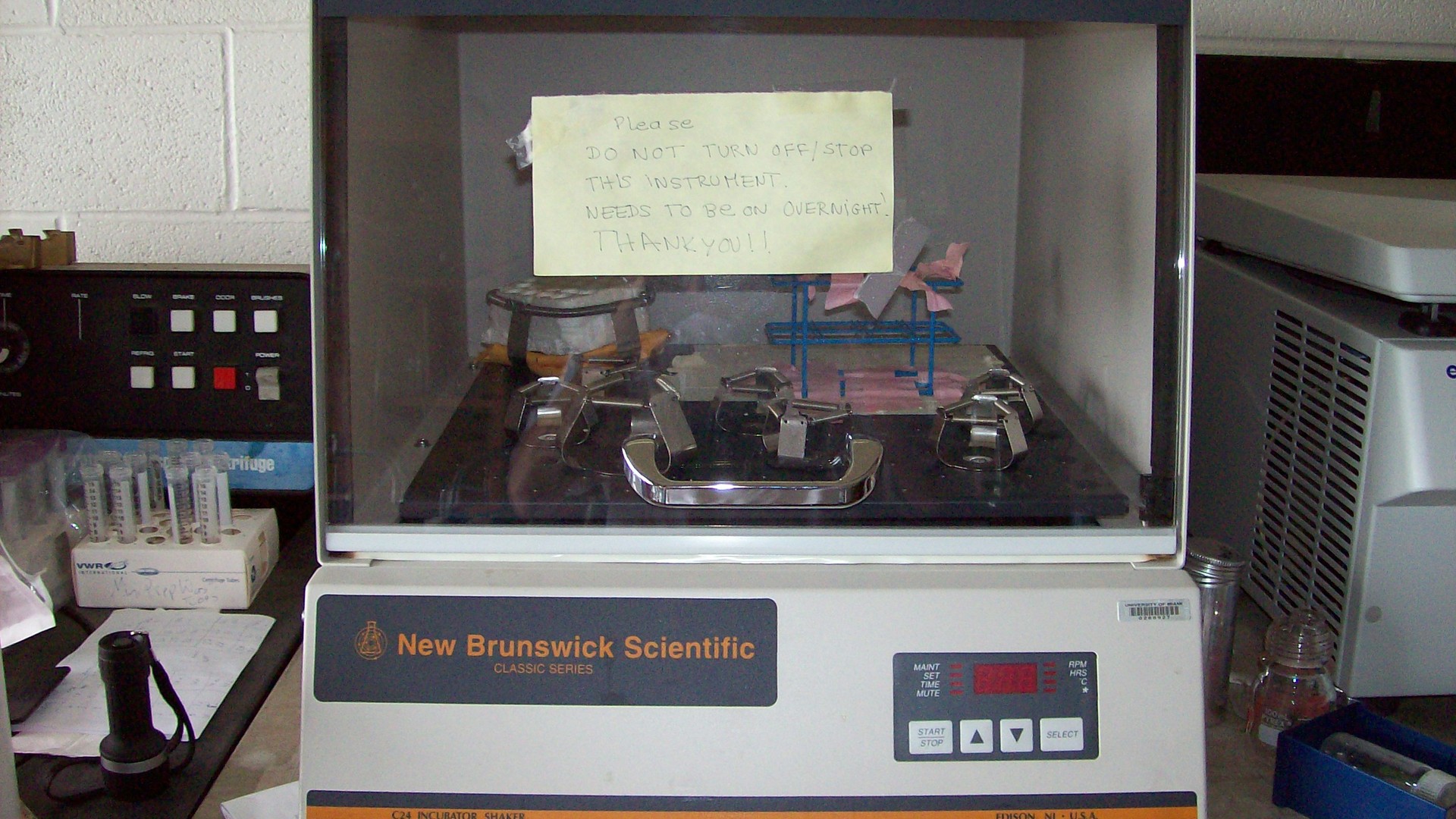
The routine work of mixing and shaking tubes and flasks can now be left to equipment. Not everyone knows what a laboratory shaker is, how to use it or what it is for. Yet this device makes laboratory technicians' work easier and mixes a wide range of substances more thoroughly. Staff can devote the time saved to skilled work.
Laboratory Shaker
A laboratory shaker is useful whenever liquids, suspensions or powders have to be mixed constantly during work. This is usually a monotonous and lengthy process that equipment handles better than a person. What is a laboratory shaker? It is an instrument that performs orbital or reciprocating movements. It is a heavy unit resembling a small table, fitted with openings or special holders for labware. Simply load the shaker, set the parameters and start it. The instrument stops by itself after the set time or when the technician switches it off.
Types of Shakers and Their Applications
Shakers can be used with a variety of labware: flasks, Petri dishes, Eppendorf and other tubes, separatory funnels and beakers. Shakers come in benchtop and floor-standing versions, analog (simple but durable) and digital (with a timer, an imbalance sensor and other functions). The following types of laboratory shakers are distinguished:
Orbital: rotate in a circle and mix liquids.
Rotators (end-over-end): suitable for powders and granular materials.
Reciprocating: convenient for various vessels in which liquids are mixed, but only a small number can be loaded at a time.
Rocking and orbital-rocking: suitable for rapid mixing of various substances, destaining or staining.
Vibrating: most often needed to remix samples that have settled.
Blood, serum, plasma, urine, reagents and other substances are best mixed on dedicated shakers. They maintain a constant tilt angle and movement frequency, so the process is consistent, which achieves better homogeneity without foaming, clotting and similar problems.
How a laboratory shaker works, how much space it takes up and other factors depend on the type of instrument. The range of equipment is wide, and you can find instruments for laboratories with both high and low sample volumes.
What to Consider When Choosing a Shaker
Laboratory shakers have many applications. When choosing one, consider the following:
The degree of protection and reliability of the instrument.
We can help you make the right choice and purchase a shaker. The “KombiMED – Your Insider in Europe” team knows the medical market well. We have a large number of partners among medical equipment manufacturers. We work in many countries and can deliver a shaker from the UK, Germany, France, Italy and elsewhere to countries in Central Asia, the Caucasus and Eastern Europe. If needed, we can also source other equipment for your laboratory.
- The number of samples to be processed
- The type of labware
- The installation site and the dimensions of the instrument
- The ability to set and change speeds
- A timer
- Sensors (imbalance detection, power-off)
- The ability to set temperature and humidity (for more complex and larger units)
- Revolutions per minute
- Multiple operating modes
Instrument Sterilizers
We also supply instrument sterilizers, furniture, labware and consumables. Contact us and we will carry out a full analysis of your facility's needs and propose the best options.
Related articles
Technical Process
Technical Process
Technical Process
Planning a purchase in this area?
Tell us what your laboratory needs and we will send you a tailored offer.
Contact KombiMED