
How to Prepare a Laboratory for Omics Projects
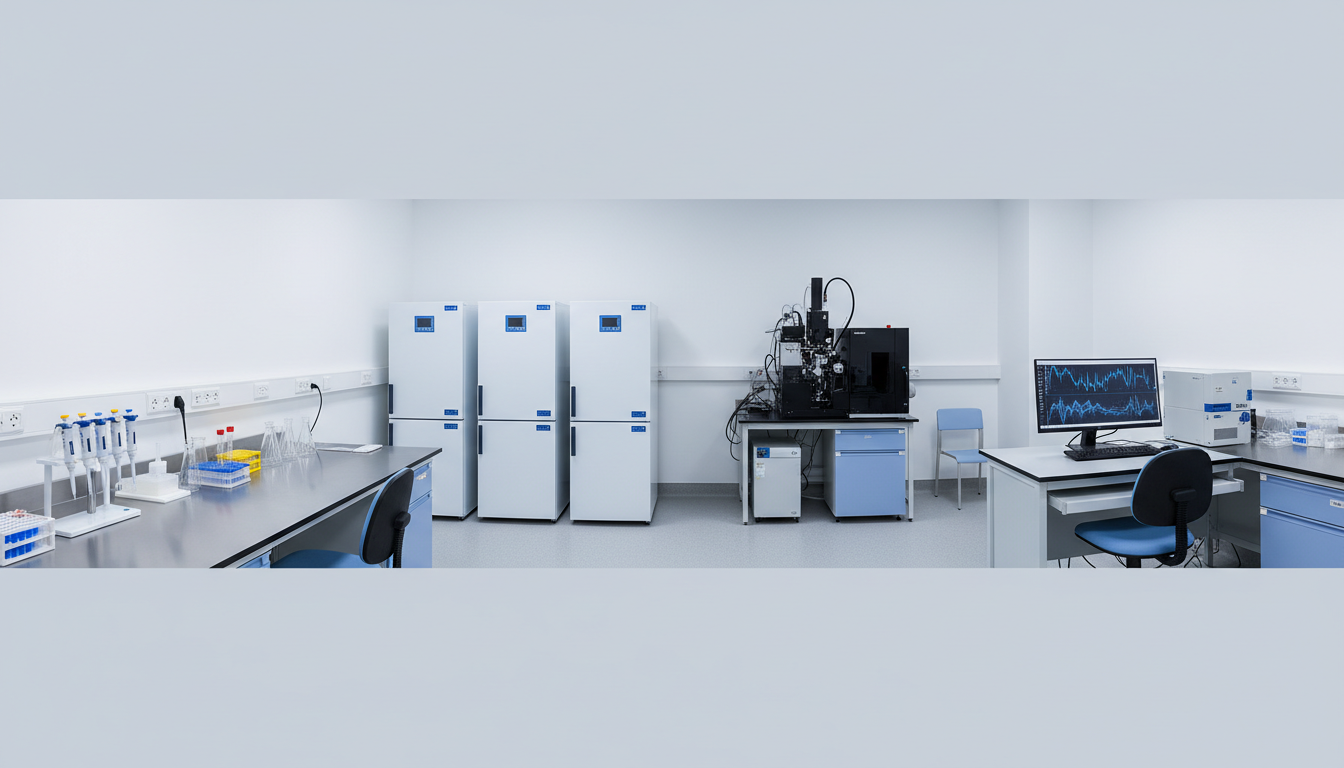
Interest in omics is growing very quickly. Laboratories are increasingly considering building up proteomics, metabolomics, transcriptomics and the related analytical processes. In practice, however, such projects start not with an idea but with a more practical question: is the laboratory organizationally and technically ready for this work?
What to Plan for First
Every omics project has several critical components:
If even one element is overlooked, the project starts to depend on chance. And for molecular research this is particularly undesirable.
- sample handling;
- sample preparation, including filtration systems;
- the analytical part;
- data processing;
- consumables;
- service and support.
Basic Laboratory Checklist
Before launching the new area, it is useful to check:
- how sample collection and labeling are organized;
- whether conditions for storage and transport are in place;
- whether there is enough sample preparation equipment;
- which consumables will be needed on a regular basis;
- how quality control will be performed;
- who is responsible for data processing and interpretation;
- whether service and equipment commissioning are provided for.
What Equipment Is Most Often Required
Even if the project focuses on high-tech analysis, the basic infrastructure matters:
- centrifuges;
- pipettes and tips;
- refrigerators and freezers;
- shakers and auxiliary equipment;
- laboratory furniture;
- storage systems for consumables;
- analytical instruments for the specific task (for example, a mass spectrometer, FPLC system or bioreactor);
- software and computing resources.
Why Equipment Should Be Viewed as a Whole
Many institutions start by buying a single instrument and only later discover that they lack consumables, compatible solutions or service. It is far more practical to evaluate the entire process at once, from sample to result. This makes it easier to plan the budget and timelines.
How KombiMED Helps
KombiMED supports the procurement of laboratory equipment from Europe and helps with the selection of solutions, consumables, documentation and logistics. For institutions planning to introduce omics, this approach reduces the burden on the in-house team and speeds up the transition to stable operation.
Related articles
Planning a purchase in this area?
Tell us what your laboratory needs and we will send you a tailored offer.
Contact KombiMED