
AI-Based Diagnostic Tools
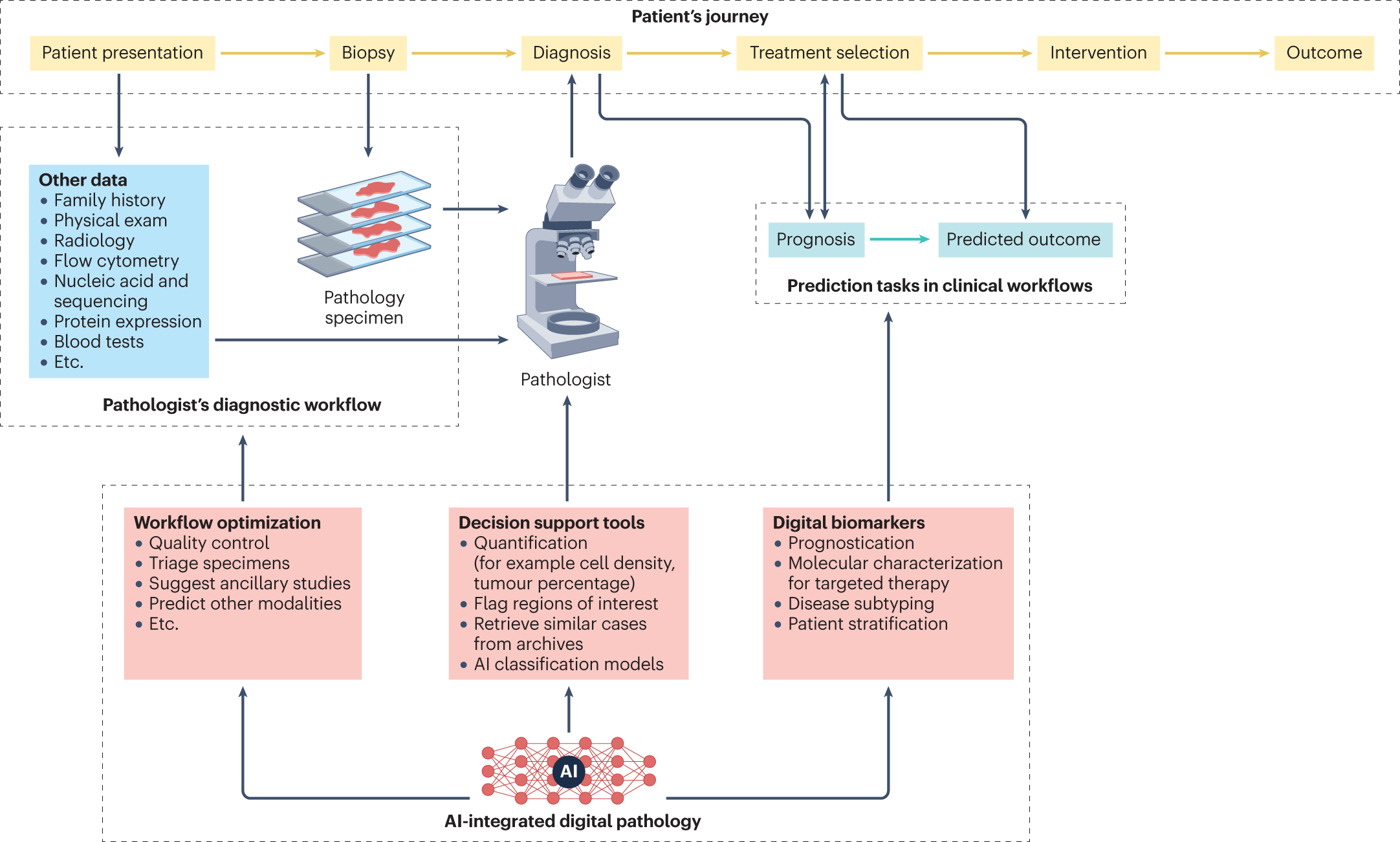
Artificial intelligence in pathology is not a concept of the future but a clinical reality. CE-IVD-marked and FDA-cleared solutions are already used to screen for prostate, breast, lung and colorectal cancer. KombiMED integrates AI modules into a laboratory's existing digital infrastructure.
Artificial Intelligence in Pathology: Current Status
Modern AI solutions for pathology are based on deep learning and analyze Whole Slide Images (WSI), full-resolution digital images of histological slides. The algorithms are trained on hundreds of thousands of annotated slides and can:
AI does not replace the pathologist; it acts as a "second opinion," reducing the risk of missed findings and speeding up the processing of routine cases.
- Detect malignant cells and micrometastases with a sensitivity comparable to that of an expert pathologist
- Quantify biomarkers (Ki-67, PD-L1, HER2, TILs)
- Grade tumors using the Gleason score, the Nottingham grading system and other systems
- Prioritize urgent cases in the laboratory workflow
Certified AI Solutions (CE-IVD / FDA)
The following solutions have undergone clinical validation and hold regulatory approval for diagnostic use:
Paige Prostate / Paige Breast
Manufacturer: Paige AI (USA)
The world's first FDA-approved AI solution for pathology. It analyzes WSI of prostate and breast biopsies and highlights areas with a high probability of malignancy.
Ibex Galen™ Prostate / Breast
Manufacturer: Ibex Medical Analytics (Israel)
A CE-IVD platform for histopathological diagnosis. Galen™ analyzes up to 20 pathological patterns on a single slide, including perineural invasion and cribriform growth.
Philips IntelliSite Pathology Solution + AI Apps
Manufacturer: Philips Healthcare (Netherlands)
An FDA-approved digital pathology platform with validated AI applications for prostate and lymph node analysis.
Aiforia Clinical Suite
Manufacturer: Aiforia Technologies (Finland)
A CE-IVD solution for WSI analysis. It covers tumors of the prostate, breast, lung, colon and stomach.
DeepDx® Prostate
Manufacturer: DeepBio (South Korea)
An MFDS- and CE-IVD-certified AI system for prostate cancer diagnosis with Gleason grading.
Research AI Platforms (RUO)
For scientific and research applications, powerful platforms are available that do not yet have clinical certification but are actively used in leading medical centers:
- PathAI: a deep learning platform for biomarker discovery and companion diagnostics development
- HALO AI (Indica Labs): classification and quantitative analysis of WSI with customizable models
- Lunit SCOPE Pathology: AI scoring of TILs and PD-L1 for immuno-oncology
- Proscia Concentriq AI Modules: plug-ins for the analysis of melanoma, breast cancer and prostate cancer
- QuPath: an open-source platform for quantitative analysis of biomedical images
Next-Generation Foundation AI Models
A groundbreaking direction is Foundation Models for Pathology: large-scale models trained on millions of WSI without being tied to a specific task. After fine-tuning, they address a wide range of diagnostic tasks:
These models are still at the research stage, but they are setting the direction of clinical AI development for the next 5–10 years.
- Virchow (Paige AI): a model with billions of parameters for general-purpose pathology
- UNI (Harvard/BWH): a vision transformer for multi-task analysis
- Prov-GigaPath (Microsoft Research): a gigapixel model for WSI
- CONCH (Harvard/BWH): a multimodal model that combines text and images
Benefits of AI Diagnostics for the Laboratory
AI algorithms detect micrometastases and small foci that may be missed during routine review.
Quantitative biomarker analysis eliminates inter-observer variability, which is especially critical for Ki-67 and PD-L1.
Automatic sorting of cases by complexity allows the pathologist to focus on the most significant cases.
AI pre-screening reduces TAT by 30–50% for routine biopsies.
Certified solutions have undergone multicenter clinical studies with confirmed specificity and sensitivity.
- Higher sensitivity
- Standardized assessment
- Optimized workflow
- Shorter turnaround time (TAT)
- Clinical safety
Multimodal AI and Early Cancer Detection
A special area is multimodal AI, which combines data from various sources: WSI images, genomic sequencing results (NGS), transcriptomic and proteomic data, radiological images and clinical information. This comprehensive approach improves diagnostic accuracy and makes it possible to create digital biomarkers that predict response to therapy.
Solutions for early cancer detection:
- Hologic Genius Digital Diagnostics: AI for cytological cervical cancer screening
- Landing AI Cytology: automated analysis of cytology slides
- Tempus Digital Pathology: a multimodal platform for integrating morphological and molecular data
- Lumea AI Integration Platform: linking digital pathology data with NGS results
Integrating AI into Existing Infrastructure
AI modules connect to the digital pathology platform and work as an add-on to the existing workflow:
1. The slide is scanned on a WSI scanner
2. The image is transferred to the IMS (for example, PathoZoom® Digital Lab)
3. The AI module analyzes the WSI and generates a heat map / report
4. The pathologist reviews the AI result and makes the final diagnosis
5. The data is integrated into the LIS and linked to the patient's case
It is important to emphasize that AI works in "second opinion" mode: the final decision always rests with a qualified pathologist. Regulatory authorities (FDA, EMA) approve AI solutions specifically as decision-support tools, not as a replacement for the physician.
KombiMED Solutions
KombiMED supports the full cycle of AI diagnostics implementation:
Request a consultation: we will help you select a certified AI solution that matches your diagnostic tasks and regulatory requirements.
*KombiMED: centralized procurement of medical equipment from Europe.*
- Audit of the laboratory's current digital infrastructure
- Selection of AI solutions to match the institution's clinical profile
- Integration with existing scanners, IMS and LIS
- Training pathologists to work with AI tools
- Technical support and model updates
Related articles
AI & Software
AI & Software
Planning a purchase in this area?
Tell us what your laboratory needs and we will send you a tailored offer.
Contact KombiMED