
Quality Control Software in Pathology
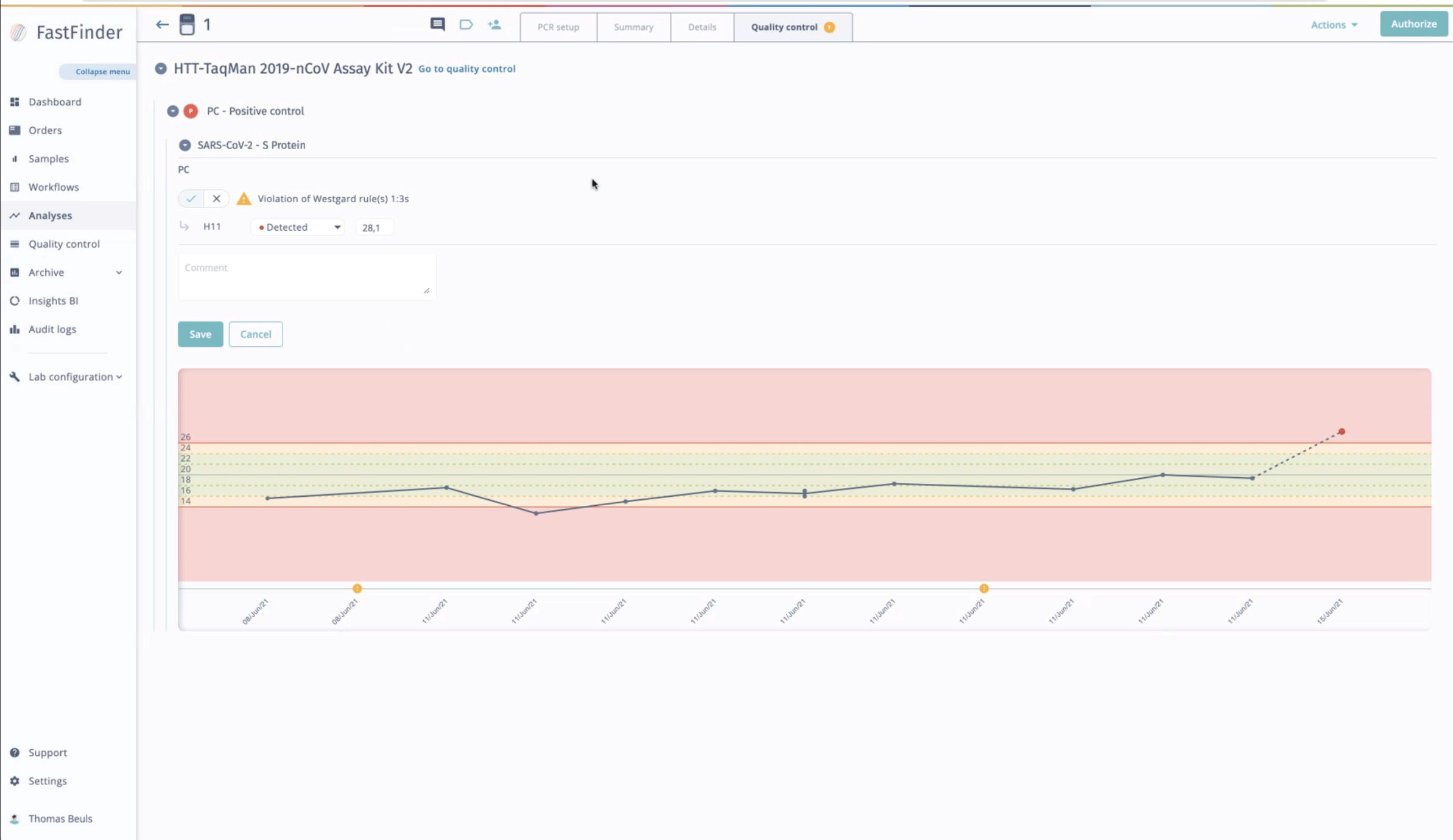
Quality control is a prerequisite for laboratory accreditation and reliable results. Modern QC software automates the monitoring of analytical systems, WSI scanning quality and regulatory compliance. KombiMED implements comprehensive QC solutions for clinical and anatomic pathology laboratories.
Why Is Software-Based Quality Control Necessary?
A laboratory error can lead to a wrong diagnosis and to ineffective or dangerous therapy. Studies show that up to 70% of medical decisions are based on laboratory test results. Systematic quality control reduces the error rate at every stage: pre-analytical, analytical and post-analytical.
QC software provides:
- Continuous monitoring: automatic real-time tracking of control materials
- Early shift detection: statistical rules identify systematic error before it affects patients
- Documentation: a complete audit trail for inspections and accreditation
- Standardization: uniform QC procedures across all analyzers and sites
Areas of Quality Control
Analytical QC of Laboratory Equipment
Classic quality control of analytical systems: running control materials, monitoring with Westgard rules and plotting control charts.
Key functions:
- Multirule Westgard rules (1-2s, 1-3s, 2-2s, R-4s, 4-1s, 10x)
- Levey-Jennings charts with trend visualization
- Automatic blocking of result release when QC rules are violated
- Interlaboratory external quality assessment (EQA/PT) programs
- Calculation of measurement uncertainty (MU)
Digital Pathology QC (WSI Scanning)
The quality of a digital slide determines the reliability of diagnosis and AI analysis. QC modules automatically assess:
Example: HistoQC is an open-source WSI quality control platform with AI-based artifact detection. It automatically filters out slides that do not meet requirements before they are passed on for diagnosis.
- Focus: detection of blurred areas (blur detection)
- Artifacts: tissue folds, air bubbles, contamination
- Coverage: percentage of tissue captured in the scanning area
- Color normalization: correction of staining variability between batches
Staining and Sample Preparation QC
Monitoring staining stability is critical for IHC and special stains:
- Control of staining intensity using reference tissues
- Tracking of reagent lots and expiration dates
- Documentation of sample preparation conditions (temperature, fixation time)
Leading Software Solutions
Bio-Rad Unity Real Time
A cloud-based platform for internal quality control (IQC) supporting 300+ analytes. Peer comparison provides an objective assessment of analyzer performance.
Westgard QC Software
Tools for calculation and visualization based on Westgard rules. Includes a sigma-metric calculator, QC plans and training modules.
Roche navify Digital Pathology QC
A quality control module within the navify ecosystem: monitoring of scanning, staining stability and companion diagnostics.
HistoQC (Open Source)
An open-source Python-based QC platform for WSI. Automatic assessment of focus, artifacts and color consistency. Scales to batch-process thousands of slides.
Visiopharm QC Module
An integrated quality control module within the Visiopharm platform. Automatic validation of IHC staining and normalization before quantitative analysis.
Roche navify Digital Pathology QC
A quality control module within the navify ecosystem: monitoring of scanning stability, staining validation for companion diagnostics, and integration with GLP/GMP protocols for clinical trials.
Sigma Metrics and QC Strategy
The modern approach to quality control is based on sigma metrics, a quantitative assessment of an analytical system's reliability:
QC software automatically calculates sigma metrics for each analyte based on bias, imprecision (CV%) and allowable total error (TEa). This makes it possible to define an individual QC strategy for each parameter.
- 6 Sigma: fewer than 3.4 defects per million opportunities, minimal QC requirements
- 5 Sigma: standard QC rules are sufficient to ensure quality
- 4 Sigma: extended QC protocols and frequent checks are required
- 3 Sigma and below: the system is unstable; calibration or replacement is needed
Benefits of Software-Based QC
Automatic rules block the release of unreliable results before they reach the clinician.
The software ensures compliance with ISO 15189, CAP, CLIA and JCI, with a complete audit trail.
Automating QC procedures reduces a lab technician's daily time spent on QC by 40–60%.
Sigma metrics and trend analysis make it possible to detect system degradation before a clinically significant deviation occurs.
A single QC dashboard for all analyzers and sites, from hematology to digital pathology.
Built-in interpretations of Westgard rules help new staff quickly master QC procedures.
- Error prevention
- Standards compliance
- Time savings
- Proactive approach
- Centralized management
- Staff training
QC Workflow in a Digital Laboratory
1. Running control materials: automatic runs on a schedule or by trigger
2. Data collection: QC results are imported from analyzers via LIS middleware
3. Applying rules: multirule Westgard rules with sigma assessment
4. Visualization: control charts, trends, peer comparison
5. Action: automatic blocking / notification / escalation
6. Documentation: generating reports for accreditation and internal audits
KombiMED Solutions
KombiMED implements comprehensive QC solutions:
Request a consultation: we will help you build a quality control system that meets international standards and the needs of your laboratory.
*KombiMED: centralized procurement of medical equipment from Europe.*
- Audit of current QC procedures and gap analysis
- Selection of software platforms for analytical and pathology QC
- Integration of QC modules with LIMS and analyzers
- Configuration of rules, thresholds and notifications
- Staff training and accreditation preparation
Related articles
AI & Software
AI & Software
Planning a purchase in this area?
Tell us what your laboratory needs and we will send you a tailored offer.
Contact KombiMED