
Workflow Optimization in the Pathology Laboratory
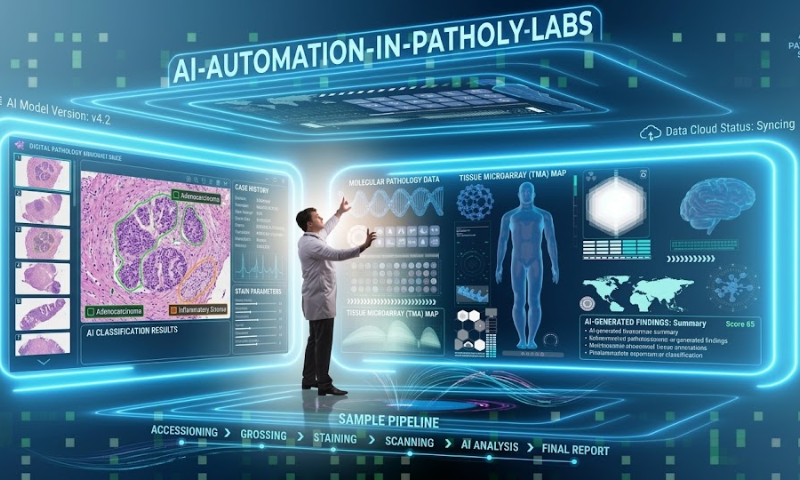
Workflow optimization turns a chaotic flow of slides and requisitions into a managed, transparent and measurable process. Modern tools automate case routing, balance the workload among pathologists and shorten TAT. KombiMED implements workflow optimization solutions covering everything from specimen accessioning to sign-out of the report.
Problems with the Traditional Workflow
A typical anatomic pathology laboratory faces a set of recurring problems:
- Lack of status visibility: there is no way to know what stage a particular case is at without physically searching for it
- Uneven workload: one pathologist is overloaded while another is underutilized
- Long TAT: the time from receipt of a biopsy to the report exceeds targets
- Lost slides: physical slides get lost when transferred between workstations
- Manual routing: a secretary or technician distributes cases by hand, creating bottlenecks
- No metrics: there are no data to support management decisions
Components of Workflow Optimization
Automated Case Routing
An intelligent system distributes cases among pathologists based on:
- Subspecialty: mastectomies go to a breast pathologist, skin biopsies to a dermatopathologist
- Workload: a balancing algorithm takes each specialist's current queue into account
- Urgency: frozen sections and suspected malignancies receive the highest priority
- Expertise: complex cases are routed to senior specialists
Case Management System
A single interface for tracking every stage of case processing:
- Accessioning and gross description
- Tissue processing (fixation, processing, embedding)
- Microtomy and staining
- Scanning (in a digital workflow)
- Microscopy / WSI review
- Report preparation and sign-out
- Ancillary studies (IHC, FISH, molecular)
Gross Documentation
Macro imaging systems capture visual data during grossing:
Example: PathoZoom® LiveView Macro is a macroscopic imaging and documentation system integrated into the patient case. It ensures standardized documentation and traceability.
- Photographing the gross specimen with automatic linking to the case
- Annotating sampling areas
- Dictating the gross description with speech recognition
Key Performance Metrics
Optimization is impossible without measurement. Modern workflow platforms track:
These metrics not only make it possible to assess the current situation but also to justify management decisions, from hiring an additional pathologist to purchasing a new scanner. Regular KPI monitoring builds a culture of continuous improvement in the laboratory.
- TAT (turnaround time): time from accessioning to report, broken down by stage
- TAT by test type: separately for biopsies, surgical specimens and frozen sections
- Pathologist workload: number of cases and slides per day/week
- Ancillary testing rate: share of cases requiring IHC, FISH or consultation
- Urgent case rate: trends and structure of the urgent case flow
- Pending cases: number of unfinished cases by pathologist and stage
- Revision rate: percentage of cases with a changed diagnosis after review
- Utilization rate: percentage of capacity used for each analyzer and scanner
- First-pass yield: percentage of cases completed without requests for additional stains or recuts
Benefits of an Optimized Workflow
Automated routing and prioritization reduce TAT by 25–40% for routine cases.
Balancing prevents burnout of individual specialists and idle time for others.
The referring physician sees the status of their case in real time, which reduces the number of calls to the laboratory.
Dashboards reveal bottlenecks, enabling evidence-based planning of staffing, equipment and consumables.
Standardized report templates and automatic data integration eliminate formal defects.
The system adapts to growing volumes without a proportional increase in administrative staff.
- Shorter TAT
- Even workload
- Transparency for clinicians
- Data-driven management decisions
- Documentation quality
- Scalability
Integrating Workflow Tools
Workflow optimization requires integrating multiple systems:
Integration protocols: HL7 v2/FHIR, DICOM, IHE Anatomic Pathology Workflow (APW).
- LIMS / LIS: the source of requisitions and the recipient of results
- Digital pathology (IMS): management of WSI scanning and viewing
- HIS: transfer of reports to the electronic health record
- AI modules: preliminary screening and case prioritization
- Voice input systems: report dictation with speech recognition
Implementation Stages
1. Audit of current processes: flow mapping, TAT measurement, identification of bottlenecks
2. Design of the target workflow: developing optimal routing based on volumes and subspecialties
3. Platform selection and configuration: configuring routing rules, priorities and notifications
4. Integration: connecting to the LIMS, IMS, HIS and analyzers
5. Pilot operation: launch on a limited case flow with metric monitoring
6. Full-scale deployment: moving the entire laboratory to the optimized workflow
KombiMED Solutions
KombiMED provides the full cycle of workflow optimization:
Request a consultation: we will audit your laboratory and propose an optimization plan with measurable results.
*KombiMED: centralized procurement of medical equipment from Europe.*
- Audit and mapping of current laboratory processes
- Design of the target digital workflow
- Implementation of case management and routing platforms
- Supply of macro imaging systems (PathoZoom® LiveView Macro)
- Configuration of dashboards and reporting
- Staff training and support during the transition
Related articles
AI & Software
AI & Software
Planning a purchase in this area?
Tell us what your laboratory needs and we will send you a tailored offer.
Contact KombiMED