
Laboratory Information Management Systems (LIMS)
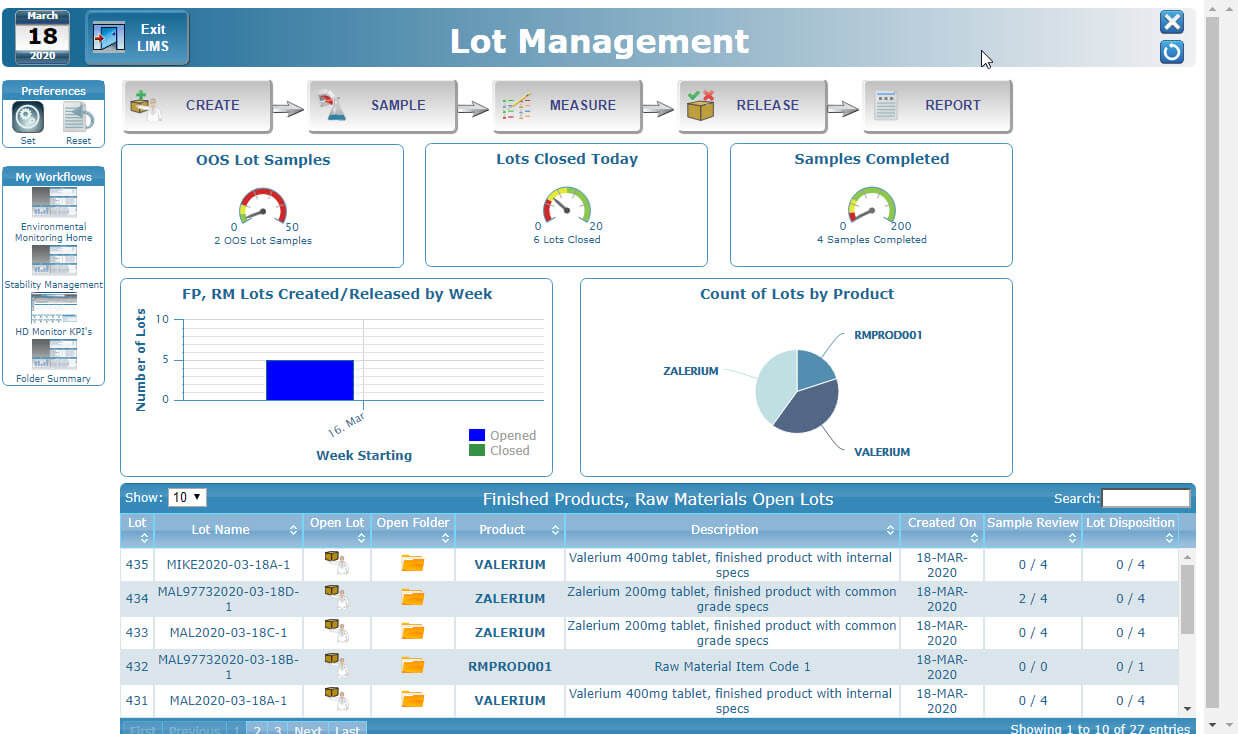
A laboratory information management system (LIMS/LIS) is the foundation of the digital laboratory. It manages the sample flow, automates documentation, ensures traceability and integrates with analytical equipment. KombiMED integrates leading LIMS platforms into the infrastructure of clinical and research laboratories.
What Is a LIMS?
A LIMS (Laboratory Information Management System) is specialized software that manages every stage of the laboratory process:
- Sample registration: automatic assignment of identifiers, barcoding, linking to the physician's order
- Track & Trace: real-time tracking of the location and status of every sample
- Workflow management: routing samples by workstation, queue and priority
- Result capture: automatic import of data from analyzers via LIS middleware interfaces
- Validation and authorization: auto-validation rules with escalation of abnormal results
- Reporting: generation of reports, TAT statistics, quality control
Leading LIMS Platforms
Dedalus GLIMS
One of the most widely used systems in Europe. GLIMS covers the full spectrum of laboratory diagnostics: clinical chemistry, hematology, immunology, microbiology and pathology. Deep integration with the Dedalus ORBIS hospital information system ensures seamless data exchange.
LabWare LIMS
A flexible platform with a powerful workflow configurator. It is used in clinical laboratories as well as in the pharmaceutical industry, environmental testing and food safety. It supports 21 CFR Part 11 for regulated environments.
CGM LAB
A solution from CompuGroup Medical, integrated with the network of CGM products for clinics and practices. Ideal for small and mid-sized laboratories focused on ease of implementation.
Epic Beaker AP
The anatomic pathology module in the Epic ecosystem. It provides complete management of pathology cases, from biopsy registration to report sign-out. Built-in integration with Epic EHR.
1C LIS
A solution built on the 1C platform and adapted for laboratories in Central Asia and the Caucasus. It supports Russian reporting standards and integration with EMIAS (the Moscow unified medical information and analytics system) and regional healthcare systems.
OpenELIS
An open-source LIMS platform developed with WHO support for public health laboratories. A scalable solution for laboratory networks in developing countries.
Features of Modern LIMS
Sample Barcoding and Identification
Each sample receives a unique barcode or RFID tag at registration. Scanning at every stage, from receipt to disposal, eliminates mix-ups and ensures full traceability.
Analyzer Interfaces
The LIMS communicates with analytical equipment via middleware or direct interfaces. Supported protocols: ASTM, HL7 v2, HL7 FHIR, POCT1-A. Results are transferred automatically, without manual entry.
Quality Control (QC)
Built-in modules for managing control materials: Westgard rules, Levey-Jennings charts, and automatic blocking of a run when QC rules are violated.
Integration with Digital Pathology
Modern LIMS integrate with digital pathology platforms via DICOM and HL7, linking WSI images to the patient case and providing a unified workflow.
Electronic Signature and Result Authorization
The LIMS supports a multi-level authorization system: automatic validation of results within reference limits, technical validation by a laboratory technician and medical validation by a physician. An electronic signature compliant with 21 CFR Part 11 gives the document legal validity.
Reagent and Consumables Management
The inventory management module tracks reagent lots, expiry dates and stock levels and automatically generates purchase requests when the minimum level is reached. This prevents downtime due to reagent shortages and reduces losses from expired materials.
Benefits of Implementing a LIMS
Automation eliminates manual entry errors, mislabeling and lost samples. According to published studies, a LIMS reduces pre-analytical errors by 60–80%.
Automatic routing and result validation shorten the time from sample receipt to report release.
Real-time dashboards show workstation load, queues and bottlenecks, providing the basis for optimizing staff scheduling.
The LIMS provides an audit trail, electronic signatures and compliance with ISO 15189, CAP and 21 CFR Part 11.
From a single laboratory to a distributed network, the LIMS supports multi-site configurations with centralized management.
- Fewer errors
- Faster TAT
- Workload management
- Regulatory compliance
- Scalability
Integrating the LIMS into the Institution's Ecosystem
A LIMS does not work in isolation; it is part of a unified information environment:
Integration standards: HL7 v2, HL7 FHIR, DICOM, IHE LAW (Laboratory Analytical Workflow).
- HIS (hospital information system): transfer of orders and results, integration with the electronic medical record
- PACS / RIS: shared storage of laboratory and radiology data
- Digital pathology: linking WSI images to the laboratory case
- ERP / Accounting: tracking of reagents, consumables and test costs
KombiMED Solutions
KombiMED delivers the full LIMS implementation cycle:
Request a consultation: our specialists will design your laboratory's information architecture based on your objectives, sample flow and regulatory requirements.
*KombiMED: centralized procurement of medical equipment from Europe. We cover the full cycle of laboratory process automation, from choosing a LIMS platform to integrating it with every component of the institution's information ecosystem.*
- Analysis of current laboratory processes and preparation of technical specifications
- Selection of the optimal LIMS platform for your scale and objectives
- Integration with analytical equipment and information systems
- Data migration from existing systems
- Staff training and support during the pilot operation phase
Related articles
AI & Software
AI & Software
Planning a purchase in this area?
Tell us what your laboratory needs and we will send you a tailored offer.
Contact KombiMED