
Electrochemical Methods and Ion-Selective Electrodes
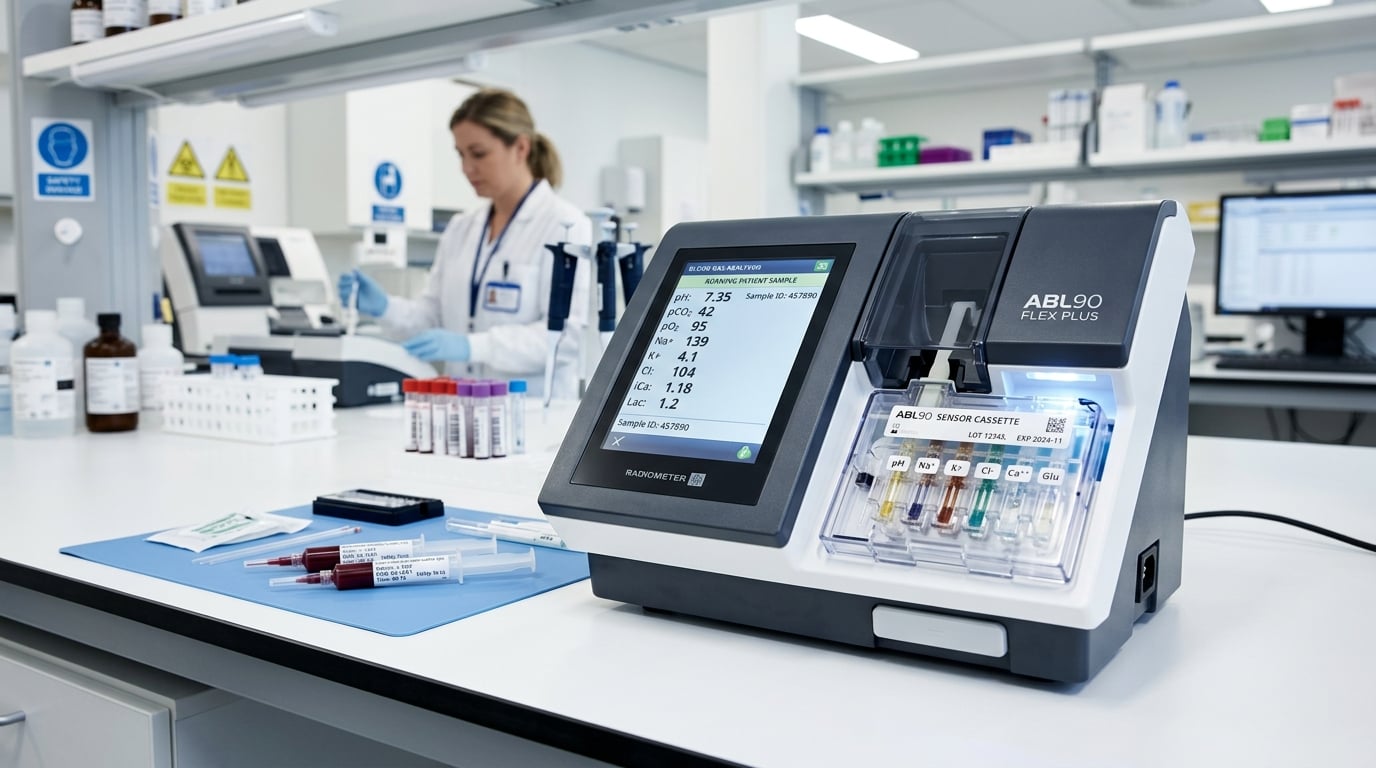
Electrochemical methods measure the electrical properties of a solution (potential, current or conductivity), which depend on the concentration of the ions being determined. In clinical chemistry, they underpin the measurement of electrolytes, blood gas analysis and acid-base balance testing. Ion-selective electrodes (ISEs), which respond selectively to a specific ion, play a key role.
Main Electrochemical Methods
| Method | What is measured | Application |
|---|---|---|
| Potentiometry (ISE) | Electrode potential | Na+, K+, Cl-, Ca2+, pH |
| Amperometry | Current at a set potential | pO2, glucose, lactate |
| Conductometry | Electrical conductivity | Solution monitoring |
| Coulometry | Quantity of electricity | High-precision measurements |
Ion-Selective Electrodes (ISE)
ISEs contain a selective membrane whose potential depends on the activity of a specific ion according to the Nernst equation. This is the most widely used method for measuring electrolytes in the clinical laboratory.
Direct and indirect potentiometry:
- Direct ISE measures ion activity in an undiluted sample; it is closer to physiology and unaffected by pseudohyponatremia
- Indirect ISE measures in a diluted sample and is integrated into clinical chemistry analyzers
Blood Gas and Acid-Base Analysis
Blood gas analyzers combine electrochemical sensors to simultaneously measure pH, pCO2 (potentiometry) and pO2 (amperometry), as well as electrolytes and metabolites. This is critical in intensive care, where the speed and accuracy of acid-base assessment shape treatment decisions.
Frequently Asked Questions
How does direct ISE differ from indirect ISE?
Why are blood gases measured electrochemically?
How often do ISEs need calibration?
Selecting an Electrochemical Analyzer
KombiMED GmbH is an independent partner for procurement and market access for laboratory equipment from Europe. We will help you select an electrolyte or blood gas analyzer that fits your laboratory's needs and handle delivery, installation, commissioning and staff training.
See also:
- Analytical methods in clinical chemistry: an overview
- ICP-MS and trace element analysis
- Laboratory diagnostics services
- Contact KombiMED for equipment selection
Related articles
Planning a purchase in this area?
Tell us what your laboratory needs and we will send you a tailored offer.
Contact KombiMED