
Allergology — Diagnostics and Therapy
The complete allergy care cycle: from ImmunoCAP molecular diagnostics to ROXALL AIT (allergen immunotherapy). KombiMED is the only supplier in the region that covers both needs: highly accurate Thermo Fisher Phadia diagnostics + proven ROXALL therapy.
Methods and equipment
What our clients get
- Exclusive distributor of ROXALL AIT in Kazakhstan, Ukraine, Azerbaijan, Uzbekistan and Kyrgyzstan
- Priority diagnostic platform — Thermo Fisher Phadia ImmunoCAP & ImmunoCAP ISAC
- Complete cycle: molecular diagnostics (Phadia) → AIT prescription → therapy (ROXALL)
- Centralised procurement of reagents and allergens from Europe
- Access to leading manufacturers: Thermo Fisher (Phadia), Siemens Healthineers, ROXALL Medizin
- Molecular diagnostics — precise identification of allergens at the IgE antibody level
- Component-resolved diagnostics (CRD / ISAC) — distinguishing genuine allergy from cross-reactivity
- ROXALL AIT — subcutaneous (SCIT) and sublingual (SLIT) immunotherapy with proven efficacy
- Follow-up monitoring of treatment efficacy with ImmunoCAP
- End-to-end supply of equipment, reagents and therapeutic allergens
About this specialty in detail
An integrated approach to diagnosis and treatment — from initial assessment to long-term monitoring
Molecular diagnostics
Testing on the Phadia platform with ImmunoCAP technology makes it possible to analyse specific IgE antibodies in the patient’s blood with the highest accuracy. By examining the molecular details of the immune response, specific allergens can be pinpointed — especially valuable for complex allergy profiles where skin tests give inconclusive results.
Allergen immunotherapy (AIT)
A specialised treatment for severe allergy. The allergen is introduced into the patient’s body gradually — subcutaneously (injections) or sublingually (tablets). The aim is to “teach” the immune system to react less to the allergen, reducing the severity of reactions. It is particularly effective for pollen, house dust mite and insect venom allergy.
Allergen avoidance and management
Individual strategies to minimise allergen exposure: protective covers, HEPA filters, dietary adjustments for food allergy. Appropriate use of symptomatic medication — antihistamines, decongestants, corticosteroids — to balance symptom relief with addressing the underlying cause.
Monitoring and follow-up
Regular visits to assess treatment efficacy, adjust AIT doses and track changes in symptoms. Ongoing monitoring ensures optimal outcomes and helps prevent asthma, chronic sinusitis and reduced quality of life.
Consequences of delayed treatment of allergic diseases
Untreated allergy can lead to chronic asthma, reduced lung function, chronic rhinitis and dermatitis. The knock-on effects include sinusitis, ear infections and secondary skin conditions. Allergic disease also affects mental health — anxiety, depression and reduced quality of life.
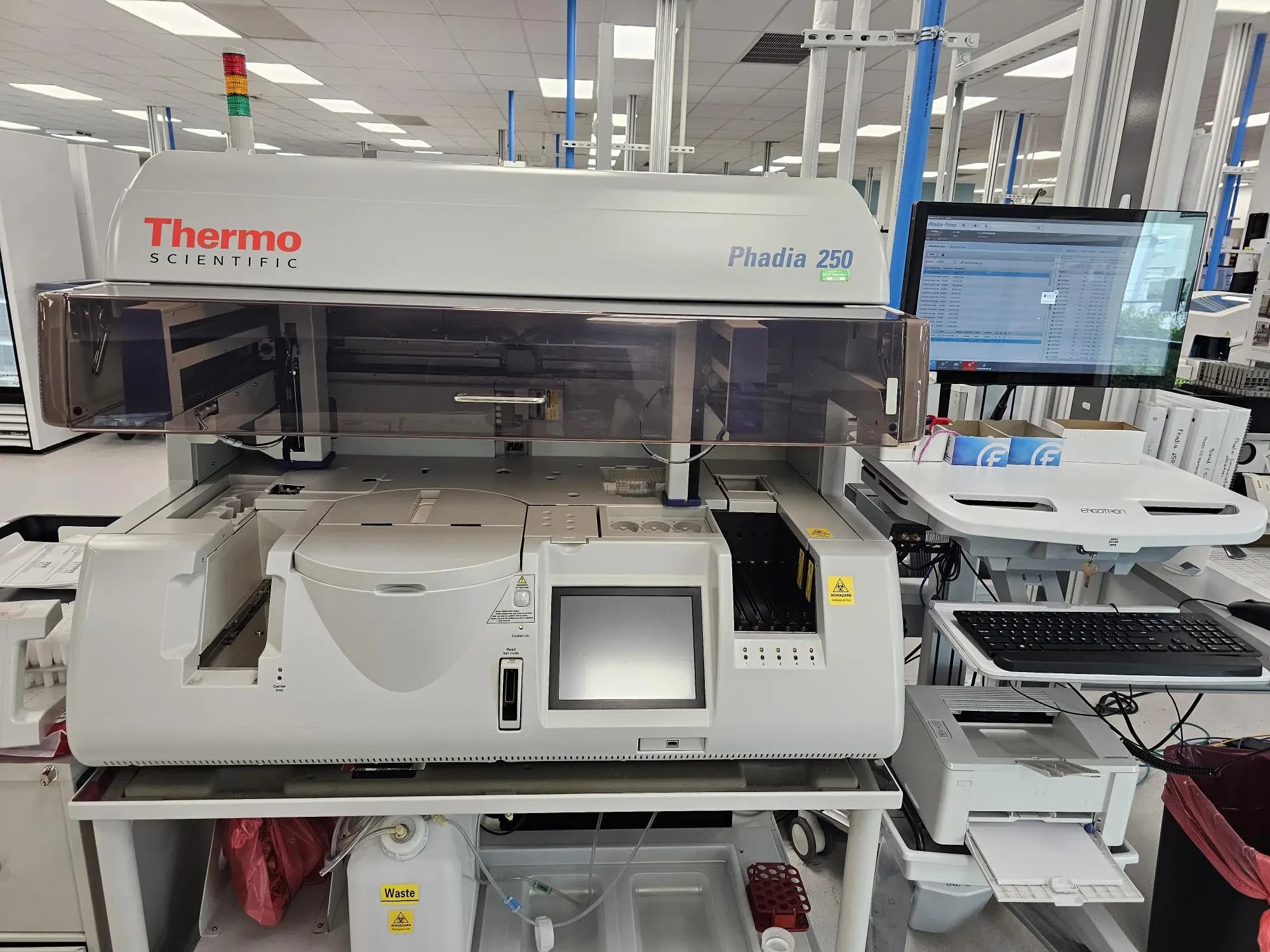
Thermo Fisher Phadia 250
Fully automated immunoassay system for allergy and autoimmune diagnostics
High throughput
Up to 350 results per shift — respond to clinicians faster and cut patient waiting times
Fast start
First result in 100 minutes — same-day diagnostics for patients
Broad allergen coverage
500+ allergens and 100+ components — precise differentiation for an individual treatment plan
Minimal manual handling
Full automation and automatic dilution — fewer operator errors and time savings
Reagent savings
Calibration stable for 28 days — fewer reruns and lower consumption of costly reagents
Assured reliability
Quality Club — a global external quality assessment programme for confidence in every result
Phadia 250 advantages
- The gold standard in allergy diagnostics — ImmunoCAP results are accepted by clinicians worldwide, increasing patients’ trust in your laboratory
- Two disciplines on one platform — allergy (ImmunoCAP) and autoimmune diagnostics (EliA) without additional equipment, saving space and budget
- Automatic switching between tests — continuous workflow, less downtime and fewer changeovers for the technician
- On-board reagent cooling — no need to store and load reagents manually, reducing the risk of errors
- Seamless LIS integration — results are transferred to the information system automatically, speeding up reporting to clinicians
- Reflex testing — for borderline results the system automatically runs follow-up tests, with no need for a repeat patient visit
- 24/7 remote monitoring — Phadia™ LabCommunity engineers keep track of system status to prevent downtime
- Scalable up to 5 systems — grow step by step, adding units as patient volumes increase
Technical specifications
| Throughput | up to 60 results/hour |
| Results per shift | ~350 (8 hours) |
| Results per week | 400–2,000 |
| First result | after 100 min |
| Sample volume | 40 µL per test |
| Sample types | Serum, plasma |
| Calibration stability | 28 days |
| LIS connectivity | Phadia™ Prime |
| Barcodes | Code 39, 93, 128, Codabar, EAN-8 |
| Dimensions (H × W × D) | 186 × 127 × 75 cm |
| Weight | 220 kg |
| Operating temperature | 18–32 °C |
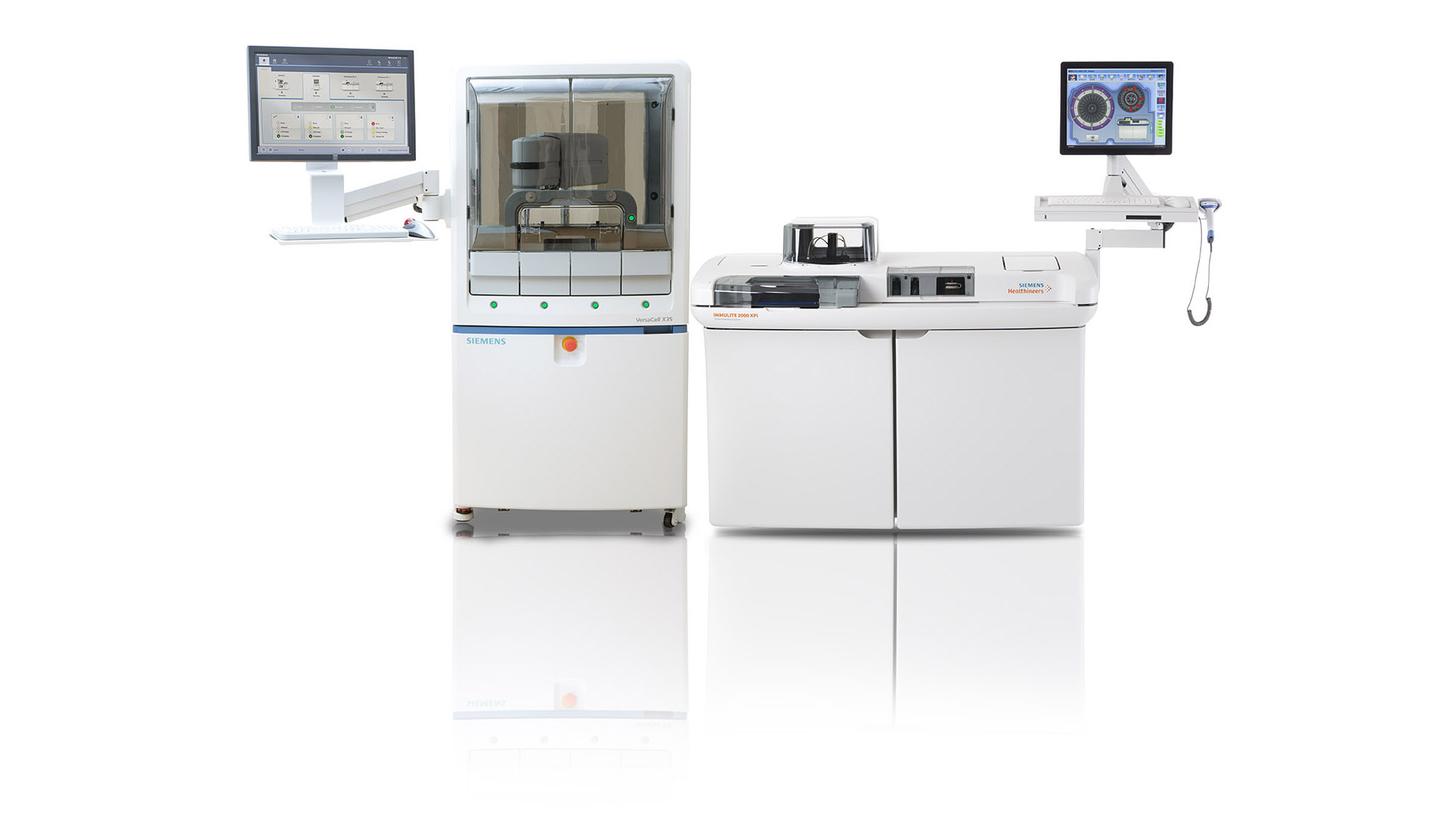
Siemens VersaCell X3 + IMMULITE 2000 XPi
Multidisciplinary automated platform for allergy diagnostics and immunoassay testing
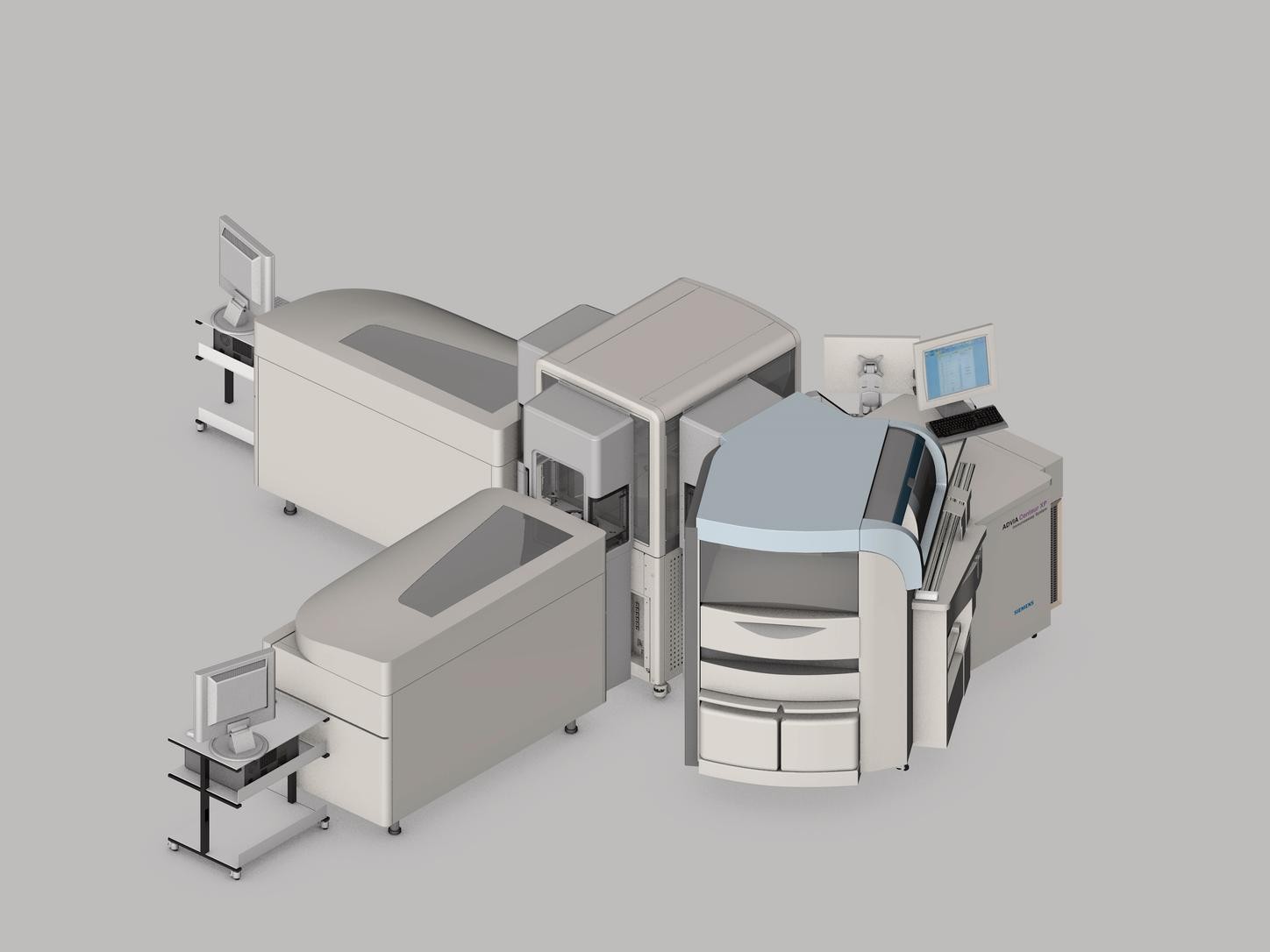
Siemens VersaCell X3
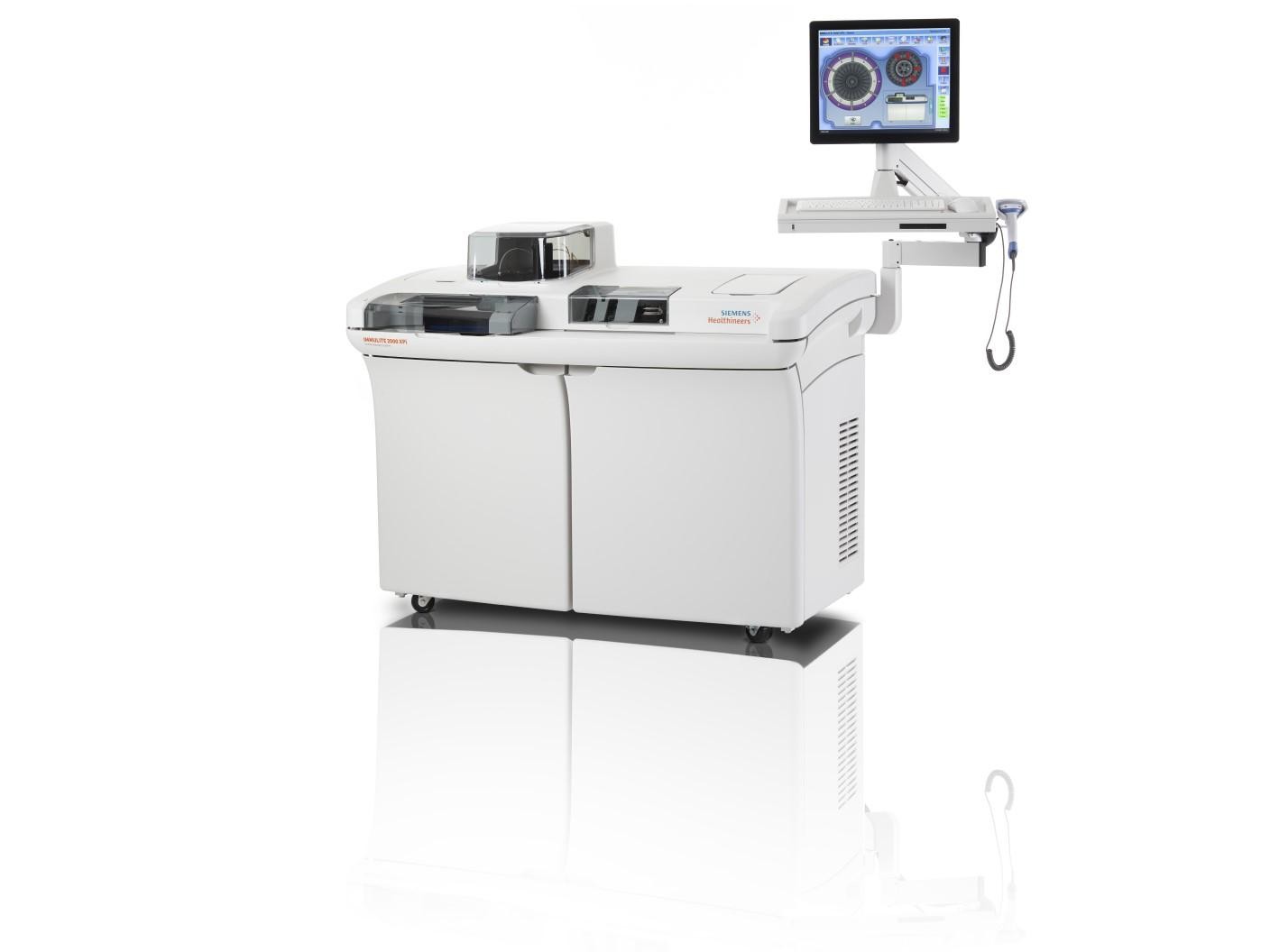
Siemens IMMULITE 2000 XPi
Maximum throughput
Up to 200 tests/hour — handles peak workloads and shortens diagnostic queues
Fast turnaround for clinicians
Result in 65 minutes — the clinician receives the data within a single patient appointment
Comprehensive allergen coverage
~500 specific allergens — no need to send samples to an external laboratory
Staff freed up
Up to 5 hours of walkaway operation — technicians can work on other tasks in parallel
Efficient on-board storage
138 allergens on board (5,520 tests) — a large inventory without frequent reloading
Minimal reagent waste
90-day reagent stability — fewer expired reagents written off and lower costs
IMMULITE 2000 XPi + VersaCell X3 advantages
- 3rd-generation technology (3gAllergy) — liquid-phase allergens retain their native structure, giving more accurate diagnostics and fewer false results
- Coverage of ~500 allergens — animals, pollen, food, mites, moulds, insect venom — the patient gets the full picture in one place
- Component-resolved diagnostics — pinpointing the exact protein the patient reacts to, for personalised therapy (AIT)
- Full automation with VersaCell X3 — from sample registration to result reporting without manual intervention, reducing staff workload
- One platform for everything — allergy, immunodiagnostics and veterinary testing: no need to buy separate equipment for each discipline
- Daily start-up in 15 minutes — automated maintenance and quality control, so the laboratory is ready to work without delay
- Reagent barcoding — eliminates human error in identification and improves patient safety
- 100+ additional tests across 16 disease areas — expand the laboratory’s test menu without additional equipment
Technical specifications
| Throughput | up to 200 tests/hour |
| Time to result | 65 min |
| Walkaway time | up to 5 hours |
| Sample positions | 90 (6 racks × 15) |
| Allergens on board | up to 138 (23 wedges × 6) |
| Test capacity | up to 5,520 tests |
| Reagent stability | 90 days |
| Reagent storage | 4–8 °C |
| Daily maintenance | Automated (15 min) |
| Weekly maintenance | 20 min |
| Monthly maintenance | 45 min |
| Disease areas | 16+ (allergy, thyroid, infectious diseases…) |
Molecular and Component-Resolved Allergy Diagnostics
Moving from conventional extracts to individual allergen molecules — next-generation precision
Component-resolved diagnostics (CRD)
Measurement of IgE to individual allergenic proteins (components) rather than to extracts. This makes it possible to distinguish genuine sensitisation from cross-reactivity — critical for polysensitised patients.
ImmunoCAP ISAC — multiplex testing
IgE to more than 100 allergen components is measured simultaneously from 30 µL of serum. A complete picture of the patient’s sensitisation in a single test — indispensable for complex allergy profiles.
Personalised therapy
The patient’s molecular profile shows who genuinely qualifies for AIT and for which allergens. This reduces spending on ineffective therapy and improves treatment outcomes.
Anaphylaxis risk assessment
Identifying markers of severe reactions (e.g. Ara h 2 in peanut allergy, Tri a 19 in wheat allergy) makes it possible to stratify risk and draw up an emergency action plan.
Fewer provocation tests
Accurate in vitro molecular diagnostics reduces the need for risky provocation tests and repeat visits — saving laboratory resources and improving patient comfort.
Potential savings
Fewer tests, no unnecessary AIT, early and accurate diagnosis — molecular allergy diagnostics lowers the overall cost of managing allergy patients.
The complete allergy care cycle
Leading Thermo Fisher Phadia diagnostics + leading ROXALL AIT therapy — from a single supplier
Diagnostics
ImmunoCAP ISAC — molecular analysis of 112 allergen components from 30 µL of serum. Precise identification of major and minor allergens for correct AIT prescribing.
AIT prescription
The patient’s molecular profile shows who genuinely qualifies for AIT and for which allergens. Component-resolved diagnostics rules out unnecessary therapy and improves outcomes.
ROXALL AIT therapy
Allergen immunotherapy with ROXALL Medizin products — subcutaneous (SCIT) and sublingual (SLIT). Proven symptom reduction of 70–90% over a 3–5-year course.
Thermo Fisher Phadia
The gold standard in allergy diagnostics
- ImmunoCAP — quantitative IgE measurement for 650+ allergens, accepted by clinicians worldwide
- ImmunoCAP ISAC 112 — multiplex testing, 112 components from 30 µL
- CRD — component-resolved diagnostics for personalised AIT
- Phadia 250 — full automation, up to 350 results per shift
ROXALL Medizin AIT
Allergen immunotherapy
- SCIT — subcutaneous immunotherapy: pollen, mites, insect venom, moulds
- SLIT — sublingual therapy: patient comfort, especially for children
- 70–90% efficacy — symptom reduction over a 3–5-year course
- Evidence base — clinical studies, EU registration
Exclusive distributor of ROXALL AIT
KombiMED GmbH is the official exclusive distributor of ROXALL Medizin products for allergen immunotherapy (AIT).
Allergy articles
In-depth articles on allergology — diagnosis, treatment and prevention
Allergy diagnosis: the skin prick test
How a skin prick test is performed and what the results mean
Molecular allergy diagnostics
ImmunoCAP, CRD and component-resolved diagnostics — next-generation precision
How to read an ISAC allergy chip
Interpreting the results of ImmunoCAP ISAC multiplex testing
Types of allergy diagnostics
An overview of all methods for diagnosing allergic diseases
Allergic rhinitis
Causes, symptoms and modern treatment options
AIT — allergen immunotherapy
Allergen-specific immunotherapy: indications and efficacy
Bronchial asthma and allergy
The link between allergy and asthma, diagnosis and disease control
Food allergy: myths and facts
Common misconceptions and scientific facts about food allergy
Complete cycle: ImmunoCAP ISAC + ROXALL AIT
From molecular diagnostics to targeted immunotherapy — the complete cycle
Allergy and psychosomatics
Psychological factors in the development of allergic diseases
Recommendations
What you need to know about allergy diagnostics — for different audiences
For laboratory managers
Consider integrating the ImmunoCAP (Phadia 250) or IMMULITE 2000 XPi platform into your laboratory. Both systems offer full automation, LIS connectivity and consistently reproducible results. KombiMED handles supply, installation and staff training.
For allergists and clinicians
Molecular allergy diagnostics (CRD) lets you move from “birch allergy” to a specific component — rBet v 1, rBet v 2 or rBet v 4. This fundamentally changes the approach to prescribing AIT and predicting its efficacy.
For patients and their families
Modern allergy diagnostics means a blood test rather than numerous skin tests. Results within 1–2 days. If you or your child have been advised to get tested, ask your doctor for ImmunoCAP or component-resolved diagnostics.
For procurement teams and investors
Allergology is one of the fastest-growing areas of laboratory medicine. Investment in modern equipment (Phadia 250, IMMULITE 2000 XPi) pays back within 12–18 months at a workload of 30–40 tests per day or more.