
The Anti-Aging Laboratory of the Future: From Concept to Complete Equipment
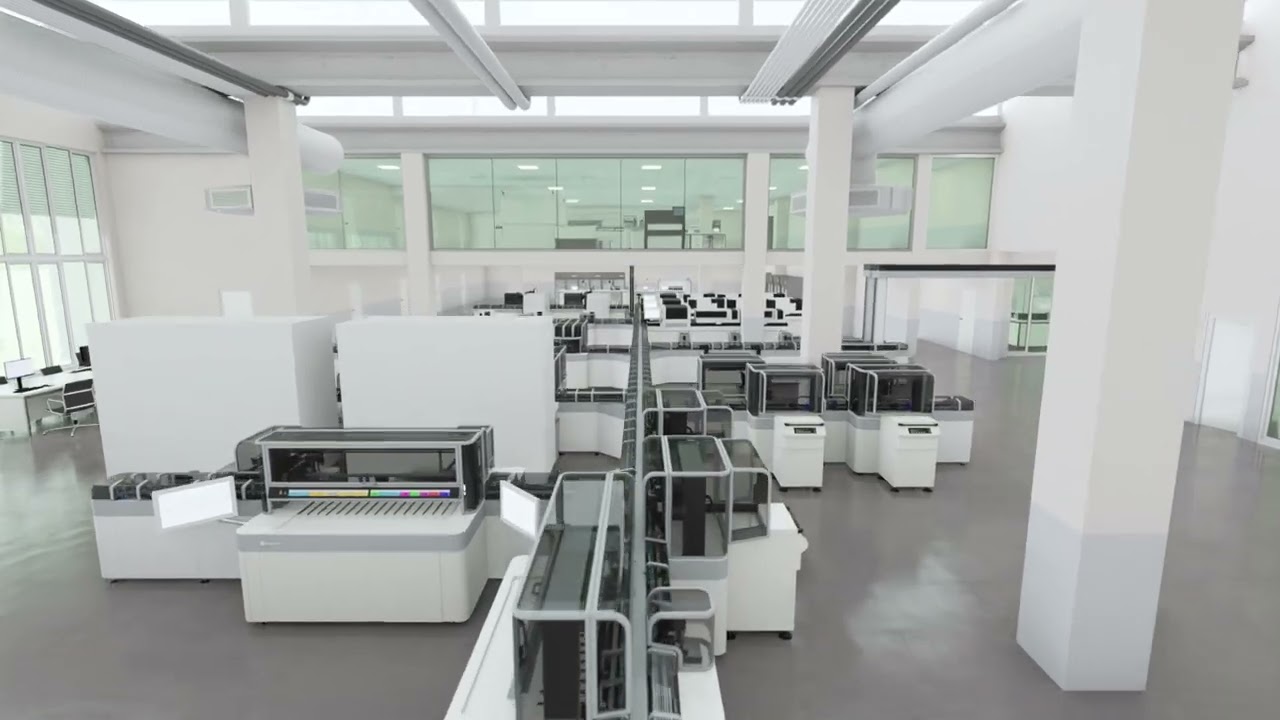
The Anti-Aging Laboratory of the Future: From Concept to Complete Equipment
Anti-aging and longevity medicine are shaping a new type of laboratory: a comprehensive diagnostic center that combines classical clinical chemistry, molecular diagnostics, mass spectrometry and omics technologies. Such a laboratory can offer patients the full range of services, from a basic check-up to in-depth multi-omics profiling.
In this article, we present a reference model of an anti-aging laboratory, from zone layout and equipment selection to the business model and payback calculation. The material is based on KombiMED's laboratory equipment supply work outfitting preventive medicine laboratories in Central Asia, the Caucasus and Eastern Europe.
Reference Model: Zones and Workflows
A modern anti-aging laboratory is organized into functional zones, each responsible for a specific class of tests:
Pre-analytical zone: sample receipt and registration, centrifugation, aliquoting and barcoding. Robotic sample preparation systems (Hamilton STAR, Tecan Fluent) minimize errors and increase throughput.
Clinical chemistry zone: automated analyzers for routine testing in clinical chemistry, hematology and immunochemistry. The backbone is a Roche cobas ↗ or Beckman Coulter AU platform, which delivers a complete check-up profile.
Molecular zone: LC-MS/MS for steroid hormones, vitamins and oxidative stress metabolites; qPCR for genetic markers; ELISA for specialized analytes. Key instruments: SCIEX Triple Quad ↗, Waters ACQUITY ↗, Bio-Rad CFX.
Omics zone: NGS sequencers (Illumina NovaSeq, NextSeq; Oxford Nanopore), proteomics platforms and methylation systems. This zone delivers the “deep” anti-aging profile: epigenetic clocks, polygenic risk scores and proteomic clocks.
Bioinformatics zone: data processing servers, storage and workstations for bioinformaticians. Integration with the LIMS automates the analysis pipelines.
Minimum and Extended Equipment Lists
Depending on the budget and the target patient flow, a laboratory can start with a minimum configuration and scale up as demand grows.
| Zone | Minimum configuration | Extended configuration | Approximate budget |
|---|---|---|---|
| Pre-analytics | Centrifuges, manual aliquoting | Hamilton STAR, automated barcoding | 50,000–500,000 USD |
| Clinical chemistry | Roche cobas c 303 / Beckman AU 480 | Roche cobas pro (modular system) | 100,000–800,000 USD |
| Immunochemistry | Roche cobas e 402 / Abbott ARCHITECT | Roche cobas e 801 (high-throughput) | 150,000–600,000 USD |
| LC-MS/MS | 1 tandem mass spectrometer | 2–3 systems + dedicated HPLC | 300,000–1,500,000 USD |
| Molecular | qPCR (Bio-Rad CFX96) | qPCR + digital PCR (Bio-Rad QX600) | 50,000–300,000 USD |
| NGS | Illumina MiSeq / iSeq | Illumina NextSeq 2000 + NovaSeq X | 100,000–2,000,000 USD |
| Proteomics | — | Olink Explore / SomaScan | 500,000–2,000,000 USD |
| IT infrastructure | Basic server + LIMS | GPU server, ML pipelines, cloud storage | 50,000–500,000 USD |
Automation and Pre-Analytics
The quality of anti-aging panels depends critically on the pre-analytical phase. Unstable analytes (NAD+, glutathione, some steroids) require strict control of time and temperature from blood draw to analysis.
Robotic sample preparation (Hamilton STAR, Beckman Biomek) standardizes aliquoting, reduces the risk of contamination and frees staff for higher-value tasks. Integration with the LIS/LIMS via barcoding eliminates identification errors.
Automated sorting of samples by analytical workflow: routine clinical chemistry → automated analyzer, mass spectrometry → LC-MS/MS, molecular diagnostics → qPCR/NGS. This routing shortens TAT (turnaround time) and increases laboratory efficiency.
According to CLSI ↗ recommendations, pre-analytical automation reduces error rates by 50–80% and increases laboratory throughput by 30–40% with the same staffing.
ROI and the Anti-Aging Laboratory Business Model
The economics of an anti-aging laboratory differ substantially from those of classical clinical diagnostics. Key advantages:
High average order value. A comprehensive anti-aging panel (clinical chemistry + hormones + vitamins + oxidative stress) costs 500 to 1,500 USD. An extended profile with omics testing costs 3,000 to 10,000 USD.
Repeat visits. Anti-aging programs involve monitoring every 6–12 months, which ensures a steady flow of repeat orders. The LTV (lifetime value) of an anti-aging clinic patient is significantly higher than in routine diagnostics.
Premium segment. The target audience is patients with high purchasing power who are willing to invest in prevention and longevity. This allows the laboratory to set premium prices.
According to Frost & Sullivan ↗ estimates, anti-aging diagnostics is growing by 15–20% annually, outpacing the clinical laboratory diagnostics market (5–7%). Entering this market early provides a competitive advantage.
Example Payback Calculation
Consider a model calculation for a laboratory with the minimum configuration (investment of ~1,000,000 USD):
| Parameter | Value |
|---|---|
| Equipment investment | 1,000,000 USD |
| Average anti-aging panel price | 800 USD |
| Patients per month | 100 |
| Monthly revenue | 80,000 USD |
| Reagent costs (~30%) | 24,000 USD |
| Operating expenses (~40%) | 32,000 USD |
| Monthly net profit | 24,000 USD |
| Payback period | ~42 months (3.5 years) |
KombiMED's Role as Integrator
KombiMED acts as a comprehensive partner at every stage of setting up an anti-aging laboratory:
Consulting and design: business model analysis, equipment needs assessment, and design of laboratory zones that takes workflows and GLP/ISO 15189 requirements into account.
Equipment selection and supply: from clinical chemistry analyzers to NGS sequencers and mass spectrometers. We work with leading manufacturers: Roche, SCIEX, Waters, Illumina, Bio-Rad.
Method validation: support in developing and validating anti-aging panels, including LC-MS/MS methods for hormones, oxidative stress markers and metabolites.
Service and support: warranty and post-warranty service, supply of consumables, staff training.
Scaling: planning the phased expansion from a basic configuration to a full-scale multi-omics longevity laboratory.
Get in touch via our KombiMED contact page to discuss your anti-aging laboratory project.
Conclusion
The anti-aging laboratory of the future is not just a set of instruments but an integrated ecosystem that combines automated pre-analytics, multi-platform analytics and bioinformatic data processing. The longevity market is growing at double-digit rates, and laboratories that enter this market today gain a strategic advantage.
The right choice of equipment, phased scaling and partnership with an experienced integrator are the keys to success. KombiMED offers a full cycle of services, from concept to launch and service, helping to build a laboratory ready for the challenges of tomorrow's anti-aging medicine.
Related articles
Planning a purchase in this area?
Tell us what your laboratory needs and we will send you a tailored offer.
Contact KombiMED