
LC-MS/MS in Anti-Aging: MDA, Glutathione and Oxidative Stress
LC-MS/MS in the Anti-Aging Laboratory: Malondialdehyde, Glutathione and the Oxidative Stress Panel
Oxidative stress is one of the central mechanisms of aging described in Denham Harman's free radical theory. Excessive formation of reactive oxygen species (ROS) damages lipids, proteins and nucleic acids, accelerating cellular aging and increasing the risk of age-related diseases. For an anti-aging clinic, an objective assessment of oxidative status is a key tool for personalizing therapy.
Liquid chromatography with tandem mass spectrometry (LC-MS/MS) is recognized as the gold standard for quantifying oxidative stress markers. Unlike enzyme-linked immunosorbent assay (ELISA) or spectrophotometry, LC-MS/MS offers the highest specificity, multiplexing capability and no cross-reactivity, properties that are critical when working with chemically unstable analytes.
Key Oxidative Stress Markers
An oxidative stress panel for an anti-aging laboratory includes several groups of markers, each reflecting a specific aspect of oxidative damage:
- Malondialdehyde (MDA) is an end product of lipid peroxidation. Elevated MDA levels correlate with accelerated biological aging and the risk of atherosclerosis. LC-MS/MS avoids the false elevations typical of the spectrophotometric TBARS test.
- Glutathione (GSH/GSSG) is the main intracellular antioxidant. The ratio of the reduced (GSH) to the oxidized (GSSG) form reflects the body's antioxidant reserve. LC-MS/MS precisely separates both forms without oxidation artifacts.
- Isoprostanes (8-iso-PGF2α) are the "gold marker" of systemic oxidative lipid damage, formed non-enzymatically from arachidonic acid. LC-MS/MS provides a specificity that ELISA cannot achieve.
- 4-Hydroxynonenal (4-HNE) is a highly reactive aldehyde produced by peroxidation of ω-6 polyunsaturated fatty acids. It is involved in the modification of proteins and nucleic acids.
- Oxidized amino acids, such as 3-nitrotyrosine and methionine sulfoxide, are markers of oxidative protein damage.
LC-MS/MS vs. Alternative Methods
The choice of analytical platform determines the clinical value of the results. A comparison of the main methods:
| Parameter | LC-MS/MS | ELISA | Spectrophotometry |
|---|---|---|---|
| Specificity | Maximum | Medium (cross-reactivity) | Low |
| Multiplexing | Up to 20+ analytes | 1 analyte / well | 1 analyte |
| Sensitivity | pg/mL to ng/mL | ng/mL | µg/mL |
| Throughput | 50–200 samples/day | 90+ samples/plate | 10–30 samples/day |
| Cost per test | Medium (when multiplexed) | Low | Low |
| Sample preparation | SPE, protein precipitation | Minimal | Minimal |
| Reproducibility | CV < 10% | CV 10–20% | CV > 15% |
Equipment for the Oxidative Stress Panel
A complete laboratory setup for running the oxidative stress panel by LC-MS/MS includes the following components:
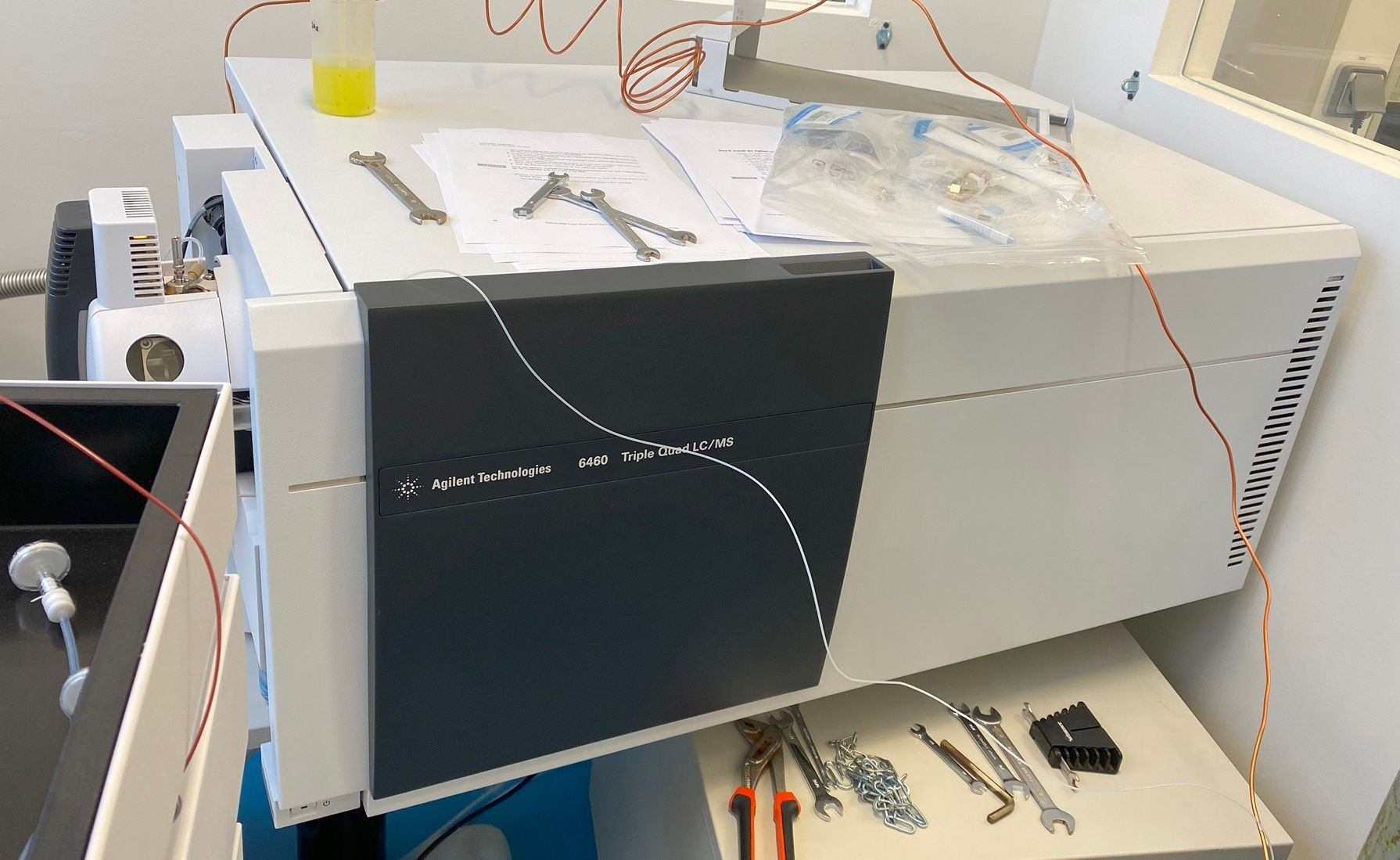
- Triple quadrupole mass spectrometer: the core element. Recommended models: Shimadzu LCMS-8060NX, SCIEX Triple Quad 7500, Waters Xevo TQ-XS. MRM (multiple reaction monitoring) mode delivers maximum sensitivity and selectivity.
- HPLC system: with a binary or quaternary pump, a temperature-controlled autosampler (4 °C for unstable analytes) and a column oven.
- SPE station: for automated solid-phase extraction. Hamilton STAR, Tecan Fluent or Biotage Extrahera, depending on volumes.
- Analytical columns: C18 and HILIC phases for separating lipophilic and hydrophilic markers, respectively.
- Nitrogen generator: for an uninterrupted supply to the mass spectrometer.
- Software: for instrument control, data processing and reporting (LabSolutions Insight, SCIEX OS, MassLynx).
Preanalytics: Critical Requirements
Oxidative stress markers are extremely sensitive to preanalytical conditions. Deviations from sample collection and storage protocols lead to artifactual oxidation and false results:
- Anticoagulant: EDTA plasma is preferred for most markers; heparin is unacceptable for isoprostanes.
- Antioxidants: add BHT (butylated hydroxytoluene) to the tube at blood collection to prevent ex vivo oxidation.
- Centrifugation: within 30 minutes of collection, at 4 °C.
- Storage: aliquots at -80 °C, thawed only once. MDA and GSH are unstable at -20 °C.
- Standards: use isotope-labeled internal standards (d₂-MDA, ¹³C-GSH) to correct for matrix effects.
Clinical Interpretation in the Anti-Aging Context
Interpreting oxidative stress panel results within an anti-aging program requires a comprehensive approach. Elevated MDA and isoprostanes combined with a decreased GSH/GSSG ratio indicate systemic oxidative damage and depleted antioxidant defenses, providing a clinical rationale for lifestyle changes, nutraceutical support and repeat monitoring.
Follow-up monitoring is especially valuable: repeating the analysis 3–6 months after starting therapy allows an objective assessment of how effective the antioxidant interventions are. Combining the panel with epigenetic clocks for biological age and 8-OHdG and other DNA damage markers gives the most complete picture of biological aging.
KombiMED: Equipping an Oxidative Stress Laboratory
KombiMED GmbH supplies complete equipment sets for laboratories running the oxidative stress panel, from triple quadrupole mass spectrometers to SPE stations and consumables. We help you select the right configuration for your needs, support method validation and train your staff. Contact KombiMED for a quotation.
Related articles
Planning a purchase in this area?
Tell us what your laboratory needs and we will send you a tailored offer.
Contact KombiMED