
External Quality Assessment in Clinical Chemistry
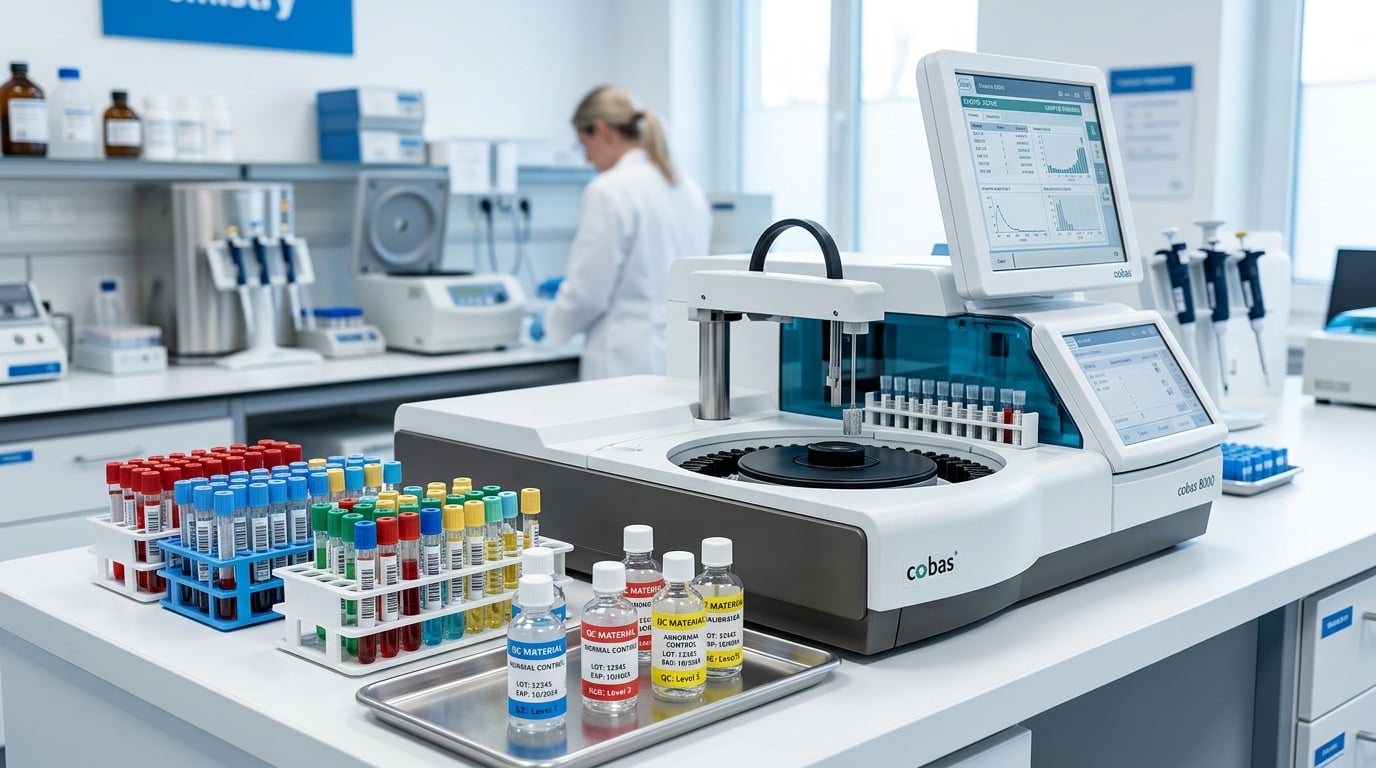
External quality assessment (EQA) in clinical chemistry is a system for independently evaluating the accuracy of a laboratory's biochemistry testing by analyzing control samples and comparing the results with reference values. Participation in EQA programs is a mandatory requirement of GOST R ISO 15189-2024 and a key condition for accreditation.
Why Clinical Chemistry Needs External Quality Assessment
Clinical chemistry is the foundation of laboratory diagnostics. Biochemistry tests account for up to 70% of all laboratory analyses. Errors in measuring basic markers such as glucose, creatinine, liver enzymes and electrolytes have a direct impact on diagnosis and treatment decisions.
Key objectives of EQA in clinical chemistry:
Without regular participation in interlaboratory comparison (proficiency testing) programs, a laboratory cannot objectively confirm the reliability of its results. This requirement is set out in clause 7.3.7.3 of GOST R ISO 15189-2024.
- Detecting systematic errors that cannot be identified through internal quality control
- Assessing interlaboratory comparability of results, which is especially critical when a patient is transferred between facilities
- Verifying analyzer calibration and validating reagent systems
- Confirming laboratory competence as part of ISO 15189 accreditation
Key Parameters of Clinical Chemistry EQA
EQA programs for clinical chemistry cover a wide range of analytes:
Routine Chemistry
- Enzymes: AST, ALT, GGT, ALP, LDH, CK, amylase, lipase
- Substrates: glucose, urea, creatinine, total protein, albumin, bilirubin
- Lipid profile: total cholesterol, HDL, LDL, triglycerides
Electrolytes and Ions
- Sodium (Na⁺), potassium (K⁺), chloride (Cl⁻)
- Calcium (total and ionized), magnesium, phosphorus
- Iron, TIBC, ferritin
Special Chemistry
- HbA1c, the key marker of glycemic control
- Specific proteins: CRP, transferrin, haptoglobin, ceruloplasmin
- Blood gases and acid-base status
International EQA Program Providers
The choice of provider determines the quality of the assessment and the international recognition of the results. Below is a summary of the leading programs for clinical chemistry.
| Provider | Program | Frequency | Key features |
|---|---|---|---|
| CAP (USA) | CHEM, GH2, ISE | 3–4×/year | The gold standard. Broad analyte coverage. International accreditation |
| Randox RIQAS (UK) | General Clinical Chemistry | Up to 24×/year | Monthly assessment. 24/7 RIQAS portal with peer comparisons |
| Bio-Rad EQAS (USA) | EQAS Chemistry | 12×/year | Unity Real-Time platform. Popular in Europe and the CIS |
| INSTAND e.V. (Germany) | Clinical Chemistry | 2–4×/year | The standard in the DACH region. Well suited to the CIS market |
| RfB / DGKL (Germany) | Clinical Chemistry | 2–4×/year | Widely used in Germany |
| Labquality (Finland) | Clinical Chemistry | 4–6×/year | Strong European provider operating in line with ISO 15189 |
How to Choose a Program
When choosing an EQA provider for clinical chemistry testing, consider the following:
1. Provider accreditation to ISO/IEC 17043, which guarantees competence and impartiality
2. Analyte coverage: the program should cover the laboratory's entire test menu
3. Equipment compatibility: availability of peer groups for your analyzer
4. Round frequency: the more frequent the rounds, the faster trends and shifts are detected
5. Shipping logistics: for the CIS region, INSTAND and Labquality programs offer simpler customs clearance
6. Analytical reports: availability of z-scores, SDI, Levey-Jennings charts and peer comparisons
Equipment Compatibility
EQA programs must be compatible with the analytical platforms installed in the laboratory. Key clinical chemistry analyzer models and recommended programs:
All of the providers listed support peer grouping by method and platform, ensuring that results are compared correctly.
| Analyzer | Manufacturer | Recommended EQA programs |
|---|---|---|
| cobas c 501 / c 503 | Roche | CAP CHEM, RIQAS, Bio-Rad EQAS, INSTAND |
| AU 5800 / AU 5811 | Beckman Coulter | CAP CHEM, RIQAS, Bio-Rad EQAS |
| Atellica CH 930 | Siemens | CAP CHEM, RIQAS, INSTAND, Labquality |
| ARCHITECT c8000 / c16000 | Abbott | CAP CHEM, RIQAS, Bio-Rad EQAS |
Interpreting EQA Results
Understanding the metrics is essential for making effective use of proficiency testing programs.
Key Metrics
- z-score: the deviation of the laboratory's result from the target value, expressed in standard deviations. Acceptable range: |z| ≤ 2.0. Values of |z| > 3.0 require immediate corrective action
- SDI (Standard Deviation Index): the peer-group equivalent of the z-score. It shows where the laboratory stands relative to participants using similar equipment
- CVR (Coefficient of Variation Ratio): the ratio of the laboratory's CV to the peer-group CV. A value > 1.5 indicates increased variability
What to Do After Unsatisfactory Results
1. Check the pre-analytical phase: storage and handling conditions of the control samples
2. Evaluate the analyzer's calibration status
3. Review internal quality control data for the period of the round
4. Repeat the test (if the sample is still available)
5. Document the root cause analysis and corrective actions in the CAPA system
Practical Implementation Recommendations
Integration into the Quality Management System
- Add all EQA programs to the laboratory's QC matrix with the columns "Internal QC", "External EQA", "Frequency", "Target values" and "Acceptance criteria"
- Integrate provider platforms (Unity Real-Time, RIQAS 24/7) with the LIS for automatic report archiving, as required by ISO 15189 §5.6
- Appoint a person responsible for monitoring EQA results and keeping the corrective action log
When Purchasing New Equipment
- Order CAP kit codes, RIQAS catalog numbers or EQAS subscriptions at the same time as the analyzer is delivered
- Take EQA program compatibility into account when choosing reagent systems
- Include the cost of EQA programs in the equipment operating budget
KombiMED's Comprehensive Approach
KombiMED provides the full cycle of equipping a clinical chemistry laboratory, from selecting the analyzer and reagents to enrolling in international external quality assessment programs. We work with the world's leading manufacturers: Roche, Beckman Coulter, Siemens and Abbott.
Our specialists can help you:
Request a consultation on choosing external quality assessment programs for clinical chemistry testing.
- Select the optimal combination of EQA programs for the laboratory's needs and budget
- Set up integration of EQA platforms with the laboratory information system
- Ensure compliance with GOST R ISO 15189-2024 requirements
Related articles
Quality Control
Quality Control
Planning a purchase in this area?
Tell us what your laboratory needs and we will send you a tailored offer.
Contact KombiMED