
External Quality Assessment in Immunochemistry and Cardiac Markers
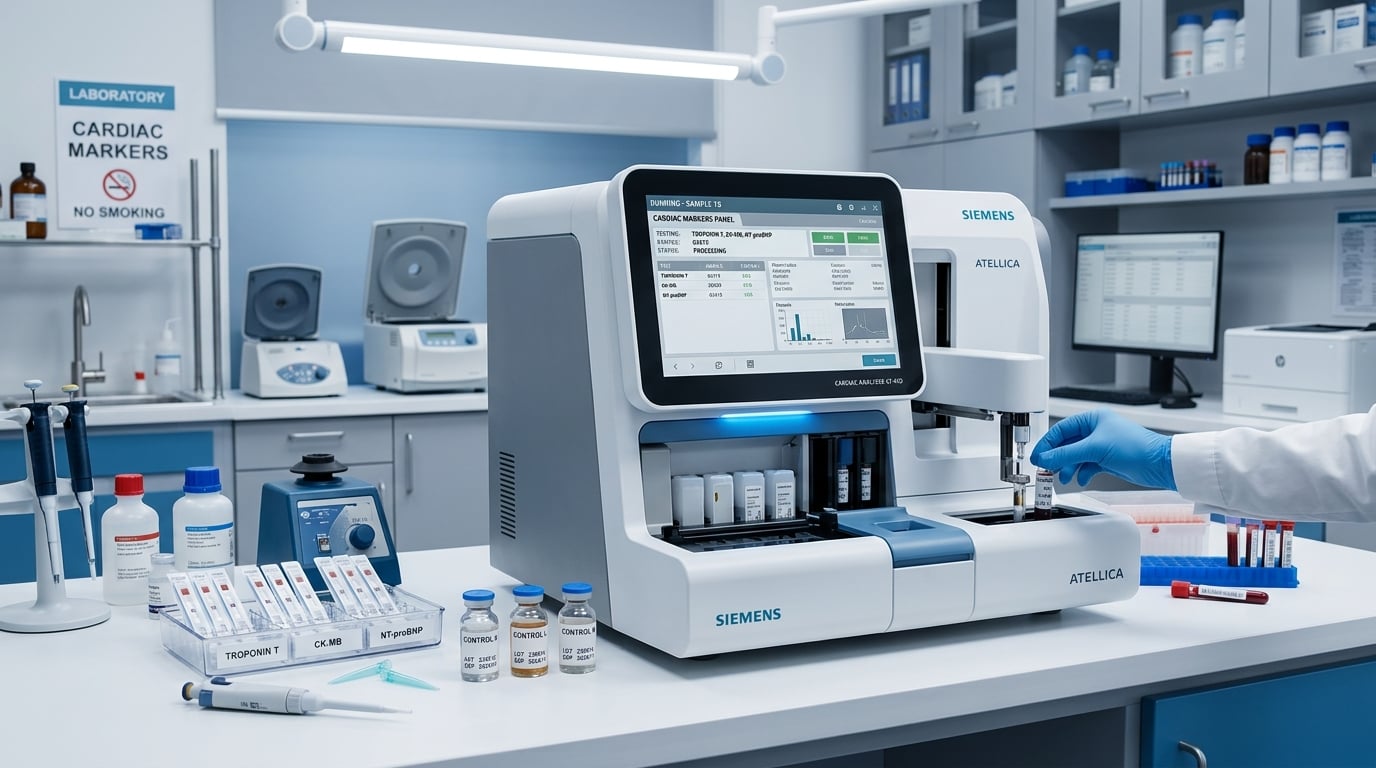
External quality assessment (EQA) in immunochemistry is the independent verification of the accuracy of immunoassay testing, from hormones and tumor markers to high-sensitivity cardiac markers. Interlaboratory comparison (proficiency testing) programs make it possible to detect systematic errors caused by differences between analytical platforms and to ensure clinically meaningful comparability of results.
Why Immunoassay Testing Needs EQA
Immunochemistry is one of the most method-dependent areas of laboratory diagnostics. Results for the same analyte (for example, troponin, TSH or PSA) can differ significantly between platforms from different manufacturers. This harmonization problem makes external quality assessment especially important.
Critical factors:
- Differences in calibration between manufacturers, due to the lack of full standardization for many analytes
- Interference from heterophile antibodies and biotin, a source of false results
- Clinical decisions based on cut-off values: an error in hs-cTnI measurement can lead to a missed myocardial infarction
- The requirement of GOST R ISO 15189-2024 (clause 7.3.7.3): participation in EQA programs is mandatory for all tests performed
Main Areas of Immunoassay EQA
Cardiac Markers
- High-sensitivity troponin (hs-cTnI, hs-cTnT), the key marker of acute coronary syndrome
- NT-proBNP / BNP for the diagnosis and monitoring of heart failure
- CK-MB mass for the differential diagnosis of myocardial injury
- D-dimer for ruling out thromboembolic conditions
- Myoglobin, an early marker of muscle tissue damage
Hormones
- Thyroid panel: TSH, FT4, FT3, anti-TPO, anti-Tg
- Reproductive hormones: FSH, LH, estradiol, progesterone, testosterone, prolactin
- Cortisol, ACTH, insulin, C-peptide
- Vitamin D (25-OH), one of the most problematic analytes in terms of interlaboratory comparability
Tumor Markers
- PSA (total and free), CA 125, CA 19-9, CA 15-3, CEA, AFP, hCG
- NSE, CYFRA 21-1, SCC: markers for lung tumors
Specific Proteins and Allergy Testing
- Total and specific IgE, IgG, IgA, IgM
- Complement (C3, C4)
- Procalcitonin (PCT), a marker of bacterial sepsis
EQA Programs for Immunoassay Laboratories
| Provider | Program | Frequency | Focus |
|---|---|---|---|
| CAP | CT1/CCTM — Cardiac Troponin | 4×/year | hs-cTnI/T, CK-MB, myoglobin |
| CAP | Cardiac (BNP/NT-proBNP) | 2×/year | Heart failure markers |
| CAP | Immunoassay, Endocrinology | 3–4×/year | Hormones, tumor markers |
| Randox RIQAS | Cardiac RIQAS | 12×/year | Full cardiac panel |
| Randox RIQAS | Immunoassay | 12×/year | Hormones, tumor markers, proteins |
| Bio-Rad EQAS | Cardiac Markers | 12×/year | Cardiac markers |
| Bio-Rad EQAS | Immunoassay | 12×/year | Immunochemistry |
| INSTAND e.V. | 554 Gerinnungs-Marker | 4×/year | D-dimer, FDP |
| INSTAND e.V. | Immunoassay, Hormone | 2–4×/year | Hormones, tumor markers |
| UK NEQAS | Cardiac Markers, Endocrinology | Up to 6×/year | Cardiac markers, hormones |
Compatibility with Immunoassay Platforms
| Analyzer | Manufacturer | Recommended EQA programs |
|---|---|---|
| ARCHITECT i2000SR | Abbott | CAP CT1, RIQAS Cardiac, Bio-Rad EQAS, INSTAND |
| cobas e 801 / e 402 | Roche | CAP CT1, RIQAS, Bio-Rad EQAS, UK NEQAS |
| Atellica IM 1600 | Siemens | CAP Immunoassay, RIQAS, INSTAND, Labquality |
| Access 2 / DxI 800 | Beckman Coulter | CAP, RIQAS, Bio-Rad EQAS |
The Harmonization Problem
Immunoassay methods are the most susceptible to discrepancies between platforms. When participating in EQA programs, pay particular attention to:
- Peer grouping by method and analyzer: an "all-methods" comparison is not valid for most immunoassay analytes
- The control material matrix: commutability of EQA samples is critical for assessing method trueness
- Accuracy-based survey results: CAP ACT programs use reference methods to assess trueness
Criteria for Choosing an EQA Program
1. Peer grouping by analyzer and reagent, an essential requirement for immunochemistry
2. Cardiac marker coverage: the program should include hs-cTnI/T, NT-proBNP and D-dimer
3. Round frequency: monthly monitoring (RIQAS, Bio-Rad) is optimal for detecting shifts in time
4. Sample commutability: give priority to programs with commutable control materials
5. Availability of accuracy-based panels to assess method trueness, not just reproducibility
6. Digital analytics: z-scores, SDI, trend charts and real-time peer comparisons
Practical Recommendations
Cardiac Markers: A Special Responsibility
High-sensitivity troponin measurement is one of the most clinically significant tests. Errors in this area can have fatal consequences. Recommendations:
- Enroll in at least two EQA programs for cardiac markers (for example, CAP CT1 + RIQAS Cardiac)
- Monitor hs-cTnI/T bias relative to the 99th percentile, the cut-off value for diagnosing myocardial infarction
- Participate in accuracy-based surveys to verify calibration
Harmonizing Results
- If a network includes several laboratories with different equipment, be sure to take part in a common EQA program to assess cross-platform comparability
- Use EQA data to calculate inter-method correction factors
Documentation and CAPA
- Keep a log of EQA results with trend analysis for each analyte
- If you receive |z| > 2.0, start an investigation: calibration, reagent lot, analyzer maintenance
- Document corrective actions in the quality management system
KombiMED's Comprehensive Approach
KombiMED supplies immunoassay analyzers from the world's leading manufacturers (Abbott, Roche, Siemens, Beckman Coulter) and provides the full cycle, from platform selection to enrollment in external quality assessment programs. We pay particular attention to harmonizing results across different analytical systems.
Our specialists can help you:
Request a consultation on external quality assessment for immunoassay and cardiac marker testing.
- Select the optimal combination of EQA programs for an immunoassay laboratory
- Solve the challenge of harmonizing results when working with multiple platforms
- Ensure compliance with GOST R ISO 15189-2024 requirements for immunoassay testing
Related articles
Quality Control
Quality Control
Quality Control
Planning a purchase in this area?
Tell us what your laboratory needs and we will send you a tailored offer.
Contact KombiMED