
External Quality Assessment in Histopathology and IHC
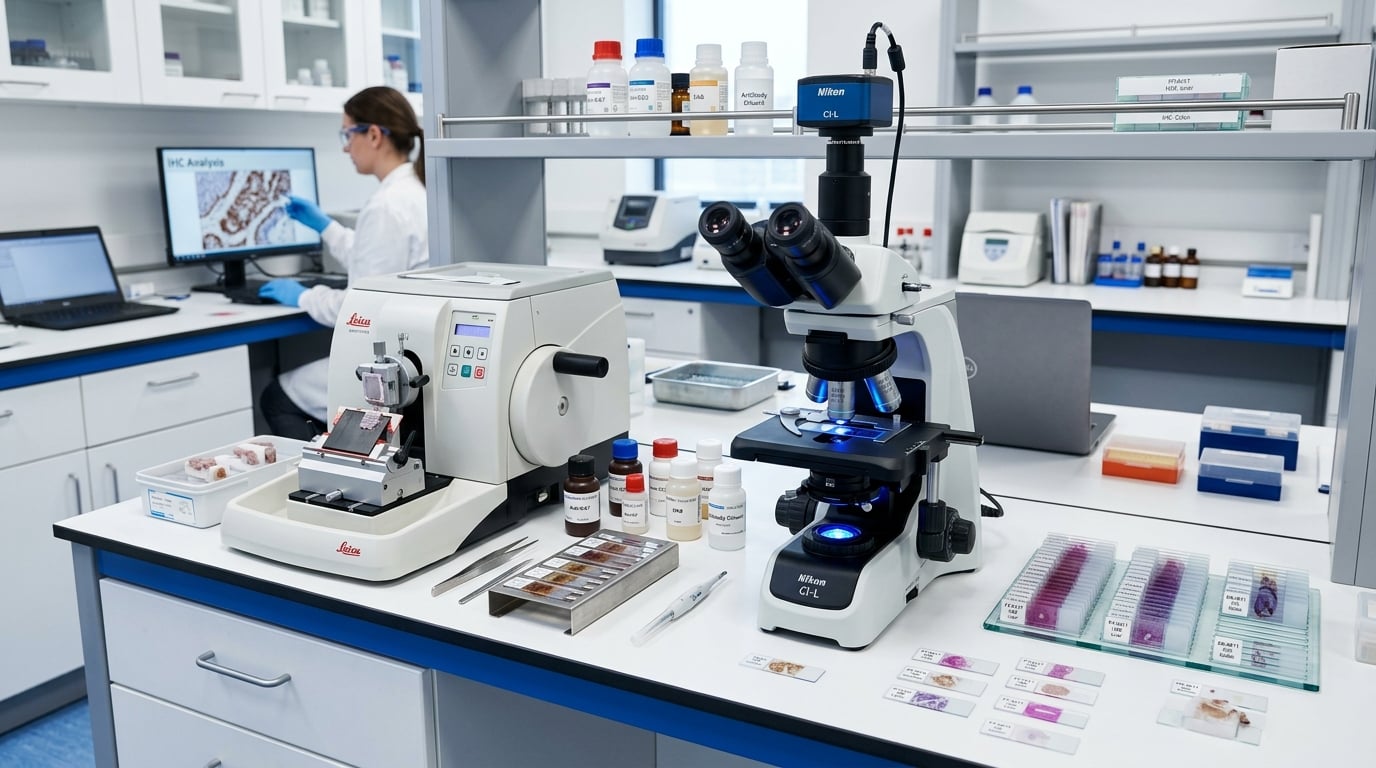
External quality assessment (EQA) in histopathology and immunohistochemistry (IHC) is an independent evaluation of the quality of tissue preparations and the accuracy of morphological diagnosis. Proficiency testing programs cover the entire workflow, from tissue fixation and processing to IHC staining and interpretation of results. In the era of targeted cancer therapy, the quality of IHC testing determines the choice of treatment.
The Importance of EQA in Anatomic Pathology
Histopathology and IHC are the areas where the subjective component of diagnosis is greatest. The pathologist's morphological report determines the diagnosis, the disease stage and the treatment strategy. The quality of tissue preparations and the intensity and specificity of IHC reactions directly affect the accuracy of interpretation.
Why EQA is critical:
- IHC determines the choice of therapy: HER2, PD-L1 and ER/PR status in breast cancer; the prescription of targeted drugs depends on the result
- Pre-analytical variability: fixation time, fixative type and processing protocol all affect IHC quality
- Interlaboratory differences: up to 20% discordance in HER2 status assessment between laboratories that do not participate in EQA
- Subjective interpretation: morphological assessment depends on the pathologist's expertise
- Regulatory requirements: GOST R ISO 15189-2024 (the Russian national adoption of ISO 15189), ASCO/CAP guidelines for HER2 and PD-L1
EQA Areas in Histopathology
Quality of Tissue Preparations
- Fixation: assessment of fixation adequacy (10% neutral buffered formalin, 6–72 hours)
- Tissue processing: quality of dehydration, clearing and paraffin infiltration
- Microtomy: section thickness and absence of artifacts
- H&E staining: intensity, contrast and preservation of detail
- Special stains: PAS, Masson's trichrome, Congo red, Perls' iron stain
Immunohistochemistry
- Diagnostic markers: cytokeratins (CK7, CK20, CK5/6), vimentin, CD45, S-100
- Prognostic markers: Ki-67, p53, ER, PR
- Predictive markers: HER2, PD-L1, ALK, ROS1, MSI/MMR
- Hematopathology: CD3, CD20, CD30, CD10, BCL2, BCL6, MUM1
Morphological Interpretation
- Consensus diagnosis: assessment of the accuracy of the histological report
- Tumor grading: reproducibility of differentiation grade assessment
- Surgical margin assessment: completeness of resection
International EQA Programs
| Provider | Program | Frequency | Focus |
|---|---|---|---|
| NordiQC | IHC modules (90+ antibodies) | 2–4×/year | IHC staining quality assessment. Reference provider |
| UK NEQAS ICC & ISH | Immunocytochemistry & ISH | 6×/year | IHC, FISH, ISH: comprehensive assessment |
| CAP | Surgical Pathology | 3×/year | Morphological diagnosis |
| CAP | IHC (HER2, ER/PR, PD-L1) | 2–4×/year | Predictive markers |
| ESP (European Society of Pathology) | EQA Pathology | 2×/year | Morphology, IHC |
| API (American Proficiency Institute) | Cytology, Histology | 3×/year | Cytology and histology |
| INSTAND e.V. | Pathology | 2×/year | Histology, IHC |
NordiQC: The Gold Standard of IHC Quality Control
NordiQC (Nordic Immunohistochemical Quality Control) is the recognized global leader in external quality assessment for IHC. Key features:
- More than 90 antibodies in the assessment program
- Detailed feedback: each slide is scored on a standardized scale (Optimal, Good, Borderline, Poor)
- Protocol recommendations: specific optimization recommendations are provided after an unsatisfactory result
- Database of optimal protocols: access to validated protocols for all major IHC platforms
Equipment Compatibility
| Equipment | Manufacturer | Type | Recommended EQA |
|---|---|---|---|
| Ventana BenchMark ULTRA | Roche | Automated IHC stainer | NordiQC, UK NEQAS, CAP IHC |
| Ventana BenchMark GX | Roche | Mid-range IHC stainer | NordiQC, UK NEQAS |
| BOND-MAX / BOND RX | Leica | Automated IHC stainer | NordiQC, UK NEQAS, CAP IHC |
| Autostainer Link 48 | Dako/Agilent | IHC stainer | NordiQC, UK NEQAS |
| Tissue-Tek Prisma | Sakura | Automated H&E stainer | CAP Histology, ESP |
| ST5020 | Leica | Multistainer | CAP, ESP, INSTAND |
IHC Quality Assessment Criteria
The NordiQC Scale
| Score | Description | Action |
|---|---|---|
| Optimal | Correct intensity, specificity and background staining | Protocol is optimal; continue |
| Good | Minor deviations, clinically acceptable | Consider optimization |
| Borderline | Risk of misinterpretation | Protocol optimization required |
| Poor | Unacceptable quality | Stop using the protocol immediately; take corrective action |
What Is Assessed
- Sensitivity: detection of true-positive cells
- Specificity: absence of false-positive staining
- Background staining: clean background with no artifacts
- Controls: presence and adequacy of positive and negative controls
- Intensity: consistency with the expected staining pattern
Practical Recommendations
EQA Participation Strategy
1. Mandatory minimum: NordiQC for all IHC antibodies in use; this is the global standard
2. For oncology laboratories: add CAP IHC (HER2, ER/PR, PD-L1) and UK NEQAS ICC
3. For morphological diagnosis: CAP Surgical Pathology + ESP EQA
4. For histotechnology: staining quality control (H&E, special stains) through CAP or ESP
Working with NordiQC Results
- After a "Borderline" or "Poor" score, switch immediately to the protocol recommended by NordiQC
- Use the NordiQC database to select optimal antibody clones and dilutions
- Keep an IHC validation log linked to EQA results
Pre-Analytics: The Foundation of Quality
- Standardize fixation time: 6–72 hours in 10% neutral buffered formalin
- Monitor warm ischemia time, from tissue removal to placement in fixative
- Keep a log of pre-analytical parameters for each block
KombiMED's Comprehensive Approach
KombiMED supplies the full range of equipment for anatomic pathology laboratories, from tissue processors and microtomes to automated IHC stainers (Roche Ventana BenchMark ULTRA, Leica BOND) and staining systems (Sakura Tissue-Tek, Leica ST5020). We also arrange enrollment in international EQA programs for histology and IHC.
Our specialists can help you:
Request a consultation on external quality assessment for your pathology laboratory.
- Select EQA programs for IHC, special stains and morphological diagnosis
- Optimize IHC protocols based on NordiQC recommendations
- Prepare your laboratory for GOST R ISO 15189-2024 accreditation for morphological testing
Related articles
Quality Control
Quality Control
Quality Control
Planning a purchase in this area?
Tell us what your laboratory needs and we will send you a tailored offer.
Contact KombiMED