
External Quality Assessment in Microbiology
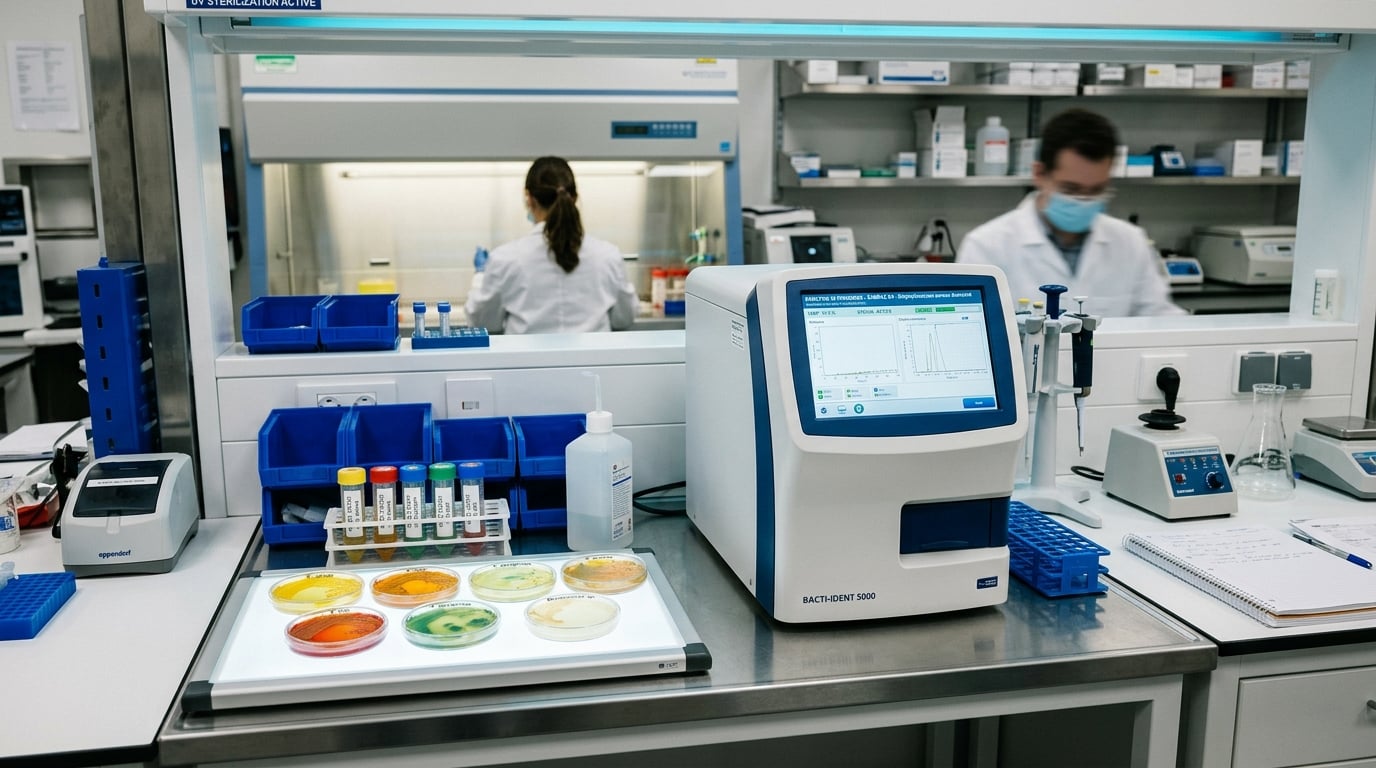
External quality assessment (EQA) in microbiology is an independent evaluation of a laboratory's ability to correctly identify microorganisms and determine their antimicrobial susceptibility. Proficiency testing (interlaboratory comparison) programs in this field cover bacteriology, virology, mycology and parasitology. Regular participation is a requirement of GOST R ISO 15189-2024 (the Russian national adoption of ISO 15189) and a cornerstone of the fight against antimicrobial resistance.
The Importance of EQA for Microbiological Diagnostics
Microbiology holds a special place in laboratory medicine. The result depends not only on the equipment but also on staff expertise, the quality of culture media and correct interpretation. Misidentification of a pathogen or incorrect antimicrobial susceptibility results can lead to ineffective therapy and a worse prognosis.
Key objectives of EQA in microbiology:
With antimicrobial resistance (AMR) rising worldwide, the accuracy of microbiological testing is of strategic importance. The WHO lists AMR among the top ten threats to public health.
- Confirming the accuracy of bacterial, fungal and viral identification
- Assessing the correctness of antimicrobial susceptibility testing (AST)
- Verifying the performance of automated identification systems (VITEK 2, MALDI-TOF)
- Quality control of blood cultures and molecular pathogen detection
- Detecting errors in the pre-analytical and analytical phases
Areas Covered
Bacteriology
- Identification of gram-positive and gram-negative bacteria
- Determination of the minimum inhibitory concentration (MIC)
- Detection of resistance mechanisms: MRSA, ESBL, carbapenemases (KPC, NDM, OXA-48)
- Pathogen typing for epidemiological surveillance
Mycology
- Identification of yeasts and filamentous fungi
- Antifungal susceptibility testing
Blood Cultures
- Correct processing of positive blood cultures
- Speed of pathogen identification from blood
- AST accuracy for sepsis pathogens
Infectious Disease Serology
- Detection of antibodies to pathogens: HIV, hepatitis B and C, syphilis, the TORCH panel
- Confirmatory tests (Western blot, ELISA)
International EQA Programs for Microbiology
| Provider | Program | Frequency | Focus |
|---|---|---|---|
| CAP | M47/M30 — Gram ± Bacteriology | 3×/year | Bacterial identification, AST |
| CAP | V-BC — Blood Culture | 2×/year | Blood cultures |
| UK NEQAS | Bacteriology, AST | 6×/year | Antimicrobial resistance, identification |
| UK NEQAS | Mycology | 4×/year | Mycology |
| INSTAND e.V. | Ringversuch 359 — MALDI-TOF | 3×/year | Mass spectrometry-based identification |
| INSTAND e.V. | Microbiology, serology | 2–4×/year | Bacteriology, virology, serology |
| Labquality | Microbiology | 4–6×/year | Full range: from bacteriology to mycology |
Programs for Molecular Pathogen Detection
- QCMD: panels for PCR detection of respiratory viruses, HBV, HCV, HIV and MTB
- INSTAND: proficiency testing rounds for PCR-based infection diagnostics (programs 348 and 357)
- CAP: molecular identification, 16S/18S Sepsis Panel (MOL)
Compatibility with Microbiology Equipment
For automated identification systems (VITEK 2, MALDI-TOF), it is critical to participate in programs that support method-specific peer grouping. This makes it possible to verify that the mass spectrometer database or identification card updates are configured correctly.
| Equipment | Manufacturer | Recommended EQA programs |
|---|---|---|
| VITEK 2 / VITEK MS | bioMérieux | CAP M47, UK NEQAS Bacteriology, INSTAND |
| BACTEC FX / FX40 | BD | CAP V-BC, INSTAND, Labquality |
| MALDI Biotyper | Bruker | INSTAND 359 (MALDI-TOF), CAP M47 |
| WASPLab | Copan | CAP Bacteriology, UK NEQAS |
| Phoenix M50 | BD | CAP M47, UK NEQAS AST, INSTAND |
Specifics of EQA in Microbiology
Unlike clinical chemistry and hematology, microbiology EQA is qualitative: what is assessed is not a numerical result but the correctness of identification and interpretation.
Types of Control Materials
- Lyophilized strains: stable during transport, long shelf life
- Simulated clinical specimens: as close as possible to real samples
- Digital panels: images for assessing microscopy skills (Gram staining, colony morphology)
Assessment Criteria
- Identification accuracy: agreement with the reference result down to species level
- AST correctness: agreement of S/I/R categories (susceptible / intermediate / resistant) and of MIC values with reference values
- Timeliness: turnaround time is an important indicator of clinical effectiveness
Practical Recommendations
Optimal Participation Strategy
1. Core set: CAP Bacteriology + UK NEQAS AST, providing international recognition and comprehensive assessment
2. For laboratories with MALDI-TOF: add INSTAND 359 to verify mass spectrometry-based identification
3. For molecular testing: QCMD + INSTAND for PCR panels of infectious agents
Working with Results
- Analyze identification errors: confusion between related species (for example, S. pneumoniae vs S. mitis) indicates that the database needs updating
- Discrepancies in AST results are a reason to review interpretation criteria (EUCAST vs CLSI)
- Maintain a nonconformity database for trend analysis and staff training
Integration with the LIS
- Configure the LIS microbiology module to record EQA rounds automatically
- Create corrective action templates for common nonconformity categories
- Ensure an audit trail, as required by ISO 15189 for document control
KombiMED's Comprehensive Approach
KombiMED supplies equipment for the complete microbiology workflow, from inoculation and incubation systems to automated identification systems (bioMérieux VITEK 2, Bruker MALDI Biotyper) and blood culture analyzers (BD BACTEC). We also arrange enrollment in international EQA programs tailored to your laboratory's configuration.
Our specialists can help you:
Request a consultation on external quality assessment programs for your microbiology laboratory.
- Select EQA programs for bacteriology, mycology and molecular detection
- Arrange the supply of control strains in compliance with biosafety requirements
- Prepare your laboratory for GOST R ISO 15189-2024 accreditation for microbiological testing
Related articles
Quality Control
Quality Control
Quality Control
Planning a purchase in this area?
Tell us what your laboratory needs and we will send you a tailored offer.
Contact KombiMED